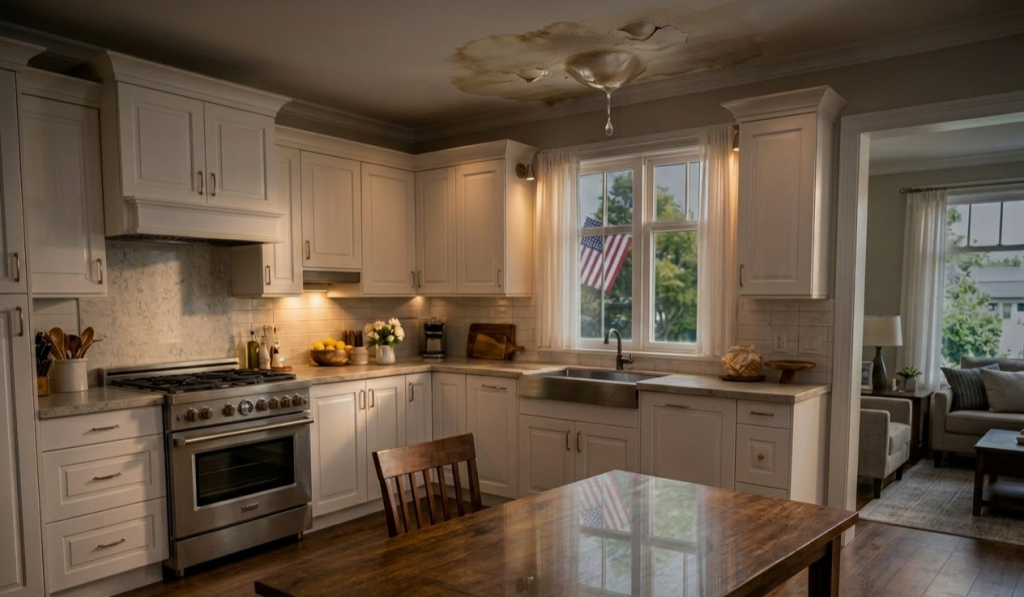
Illinois Home Failure Intelligence
How This Helps Homeowners
Illinois plumbing failures rarely come from one isolated problem.
Movement underneath the home combines with freeze exposure, aging materials, urban infrastructure fatigue, and shifting water conditions across different parts of the state.
Chicago homeowners often deal with century-old plumbing corridors hidden beneath dense neighborhoods.
Suburban expansion areas experience a different pattern entirely.
Older farming communities across Central Illinois encounter corrosion, mineral buildup, and groundwater instability tied to decades of system aging.
Contractors throughout the state repeatedly uncover hidden conditions that stayed invisible for years before finally surfacing through leaks, pressure changes, drainage backups, or structural movement.
This research helps homeowners recognize those patterns earlier.
Better decisions usually happen before visible damage escalates.
Awareness also changes how people evaluate plumbers, repipe needs, sewer risks, slab leak exposure, and long-term infrastructure stability.
Illinois homes rarely fail all at once.
Most systems decline in layers.
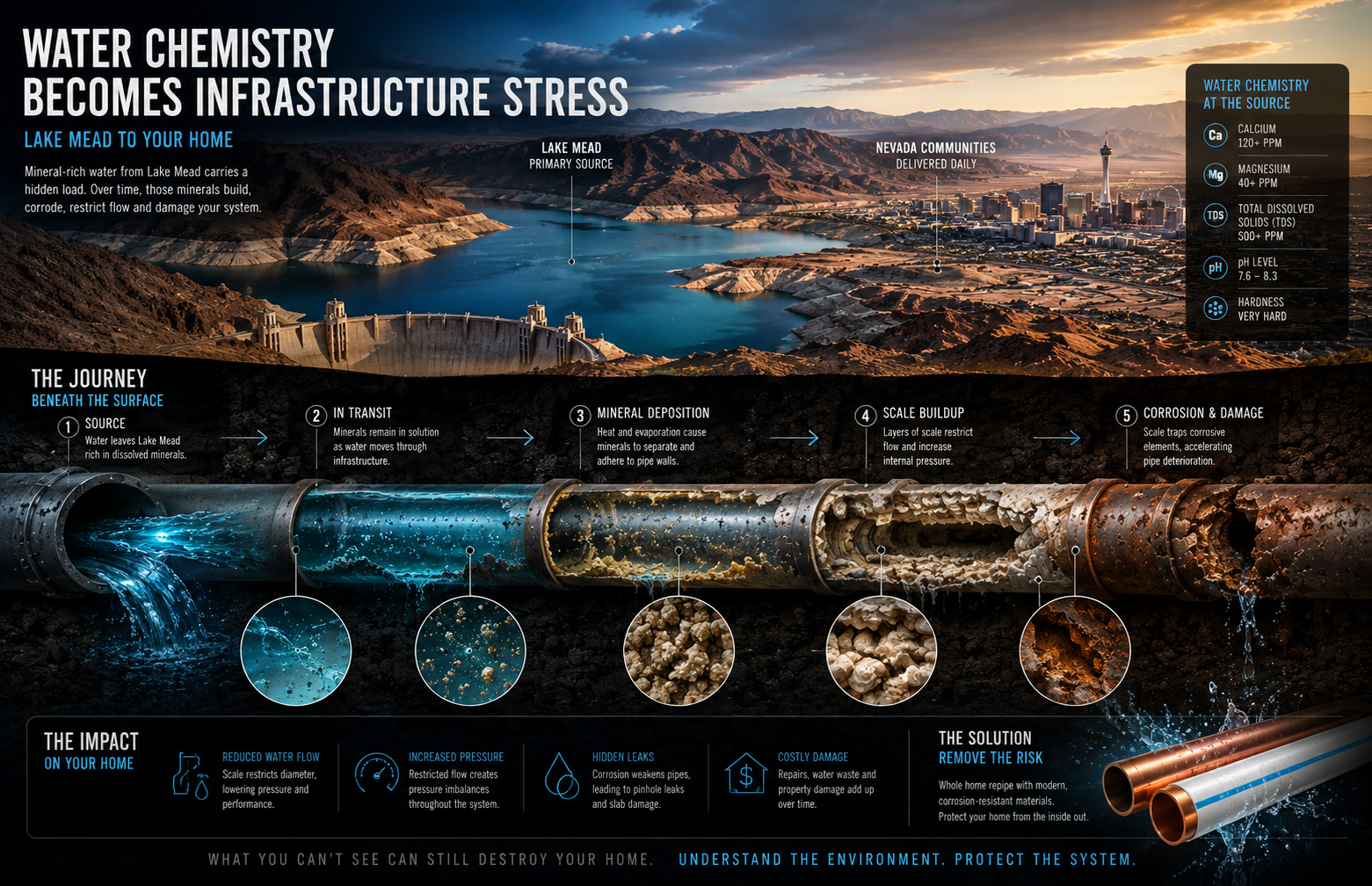
Illinois Exists Inside Multiple Plumbing Environments
Northern Illinois behaves differently than Southern Illinois.
Lake Michigan moisture patterns create one set of conditions around Chicago.
Freeze-thaw expansion affects another layer of infrastructure statewide.
River saturation along the Mississippi, Illinois, and Ohio River systems creates separate underground stress conditions.
Meanwhile, older industrial regions contain some of the nation’s most aging residential plumbing systems.
Large portions of Chicago still rely on infrastructure corridors originally developed generations ago.
Galvanized piping remains active inside many homes built before modern material transitions occurred.
Lead service line discussions continue across Illinois because so much underground infrastructure predates current standards.
Pressure instability becomes more common when old systems connect with modern renovations.
Contractors frequently uncover partial upgrades where newer copper or PEX systems tie into deteriorating legacy materials.
That transition point often becomes the weakness.
Expansion and contraction accelerate the problem during winter.
Moisture intrusion worsens hidden corrosion behind walls and beneath slabs.
Urban density increases consequence exposure once failures begin spreading.
Chicago’s Infrastructure Age Creates Layered Failure Conditions
Chicago plumbing systems operate inside one of America’s oldest dense urban environments.
Generation after generation added new layers onto existing systems instead of fully replacing them.
Contractors regularly discover abandoned piping hidden behind finished walls.
Some homes contain several eras of plumbing materials operating simultaneously.
Galvanized lines connect into copper.
Cast iron transitions into PVC.
Partial repipes stop midway through structures.
Improvised modifications accumulate across decades.
Each transition introduces another stress point.
Winter amplifies those weaknesses.
Ice expansion places enormous pressure on aging lines already weakened by corrosion or scale buildup.
Older brick neighborhoods also trap moisture differently than newer suburban developments.
Basements across Chicago commonly reveal long-term seepage conditions tied to drainage fatigue and groundwater pressure.
Historic flood events shaped many of these vulnerabilities.
The Great Chicago Flood of 1992 exposed how interconnected underground systems could rapidly escalate into citywide disruption once infrastructure integrity breaks down.
Residential systems mirror smaller versions of those same conditions.
Hidden deterioration often stays unnoticed until pressure changes force the issue outward.
Freeze-Thaw Expansion Attacks Illinois Plumbing Systems Repeatedly
Illinois winters create ongoing expansion stress beneath homes.
Frozen ground shifts differently depending on soil composition, moisture content, and drainage conditions.
Clay-heavy regions expand aggressively after saturation.
Northern freeze cycles repeatedly compress and release underground piping.
Small pipe movement eventually turns into fittings stress, slab cracking, or joint separation.
Contractors often trace recurring leaks back to movement rather than isolated pipe defects.
Temperature swings create another problem.
Rapid warmups following deep freezes force systems through constant expansion cycles.
Pressure regulators experience strain during those transitions.
Water heaters work harder during winter peaks.
Aging shutoff valves begin failing after years of repeated thermal movement.
Meanwhile, exterior hose bibs and exposed supply lines remain common seasonal failure points throughout Illinois.
Homeowners frequently focus on the visible freeze event.
Experienced plumbers usually investigate the deeper system fatigue underneath it.
One winter rarely creates catastrophic failure alone.
Repeated exposure across decades slowly weakens the structure of the plumbing system itself.
Illinois Soil Conditions Create Hidden Underground Risk
Large sections of Illinois contain expansive clay soils.
Moisture changes cause those soils to swell and shrink continuously.
Underground plumbing absorbs that movement year after year.
Suburban developments built during rapid housing growth periods sometimes experience accelerated stress because grading and drainage systems were optimized for speed instead of long-term stabilization.
Foundation movement becomes closely tied to plumbing behavior in those environments.
Contractors frequently observe recurring slab leak patterns near foundation transition points.
Drainage imbalance compounds the issue.
Improper runoff management saturates soil beside foundations.
Extended saturation increases hydrostatic pressure against basement walls.
Subsurface movement gradually shifts underground supply and drain lines out of alignment.
Some Illinois homeowners first notice the issue through drywall cracking.
Others experience pressure fluctuations, recurring backups, or unexplained moisture beneath flooring.
The plumbing system often acts as the first warning sign of broader structural instability.
Industrial-Era Housing Still Shapes Modern Plumbing Problems
Many Illinois neighborhoods expanded during manufacturing booms.
Housing construction accelerated quickly across industrial corridors.
Material longevity standards varied dramatically during those periods.
Large numbers of homes still contain aging galvanized systems approaching failure thresholds.
Cast iron drainage fatigue remains widespread in older metro regions.
Contractors throughout Illinois regularly uncover internal corrosion severe enough to restrict flow dramatically.
Pressure complaints become common in homes where mineral buildup narrowed supply lines over decades.
Water discoloration frequently points toward active internal deterioration.
Pipe walls thin slowly from the inside.
External appearances often remain deceptively normal.
Older multi-family buildings experience especially complex conditions because generations of repairs layered new systems onto unstable infrastructure.
Maintenance history matters heavily in Illinois housing stock.
Two homes built side-by-side during the same decade may perform completely differently depending on prior upgrades, moisture exposure, and pressure management.
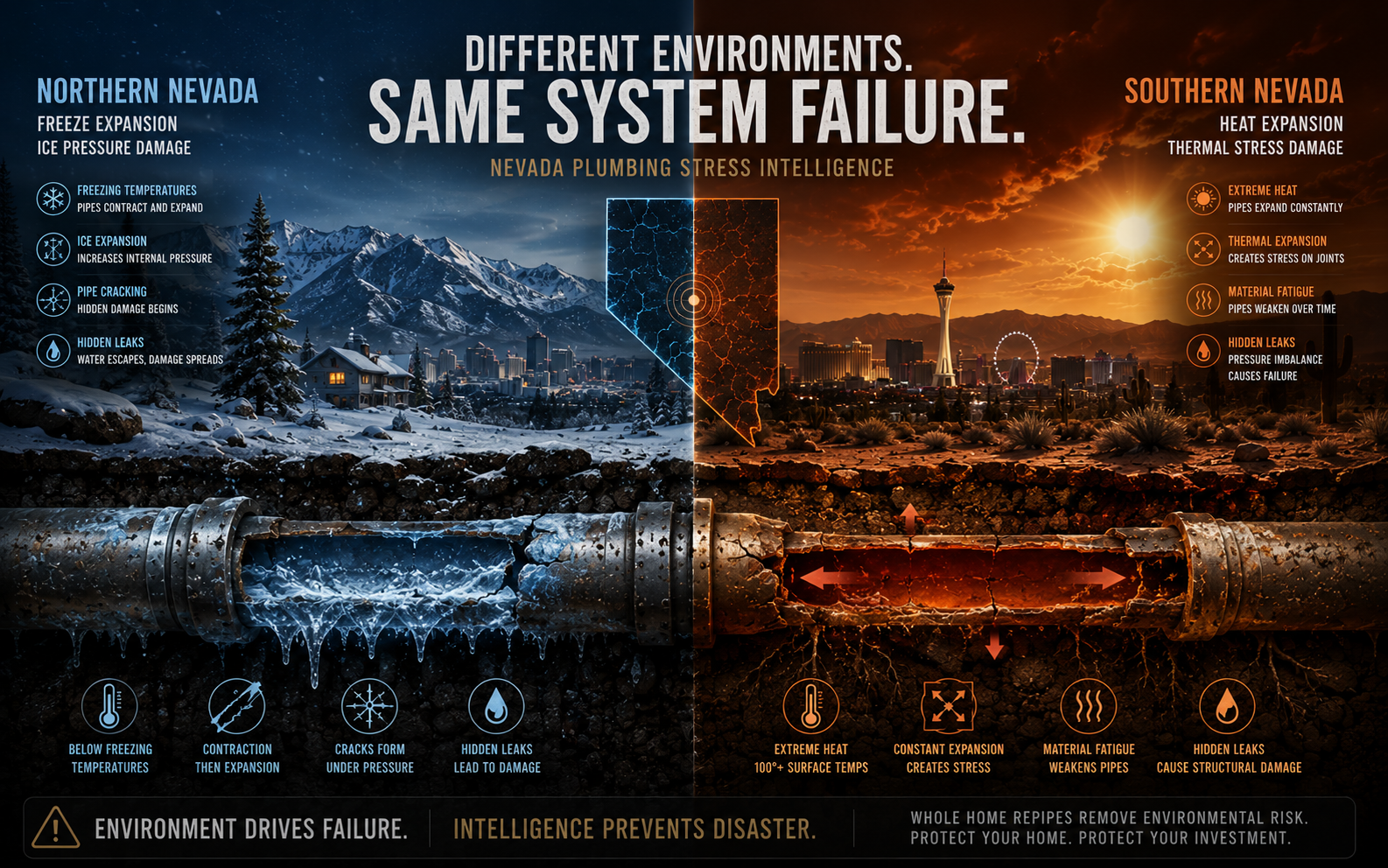
River Systems and Saturation Pressure Influence Illinois Homes
Illinois developed around water movement.
Major rivers shaped transportation, agriculture, and urban growth throughout the state.
Those same water systems also influence underground plumbing conditions today.
Flood-prone regions experience recurring saturation cycles.
Extended groundwater exposure destabilizes underground systems gradually.
Drainage systems lose efficiency over time when sediment buildup, root intrusion, and infrastructure aging combine together.
Basement moisture becomes normalized in many Illinois communities.
That normalization often delays proper intervention.
Contractors repeatedly find long-term hidden damage behind finished basement walls where homeowners assumed minor seepage was unavoidable.
Sump systems operate under heavier loads in saturation-prone regions.
Power outages during storms increase risk further.
Once water intrusion begins spreading beneath flooring or inside wall cavities, secondary plumbing deterioration accelerates rapidly.
Humidity also contributes to slow corrosion inside enclosed mechanical spaces.
Mechanical rooms across older Illinois homes frequently reveal decades of condensation exposure around copper, steel, and valve assemblies.
Boom-Era Suburbs Introduced Different Plumbing Stress Patterns
Not all Illinois plumbing risk comes from old housing.
Rapid suburban expansion created another category of vulnerability.
Large housing developments built quickly during growth surges sometimes prioritized production speed over long-term infrastructure resilience.
Contractors working in newer suburbs often encounter repetitive installation patterns across entire neighborhoods.
Improper support spacing.
Marginal pressure balancing.
Drainage slope inconsistencies.
Lower-grade fixture components.
Expansion-related stress appears sooner in systems installed rapidly at scale.
Water demand also changed significantly in modern Illinois homes.
Larger bathrooms, irrigation systems, luxury fixtures, tankless systems, and multi-zone plumbing loads place higher stress on infrastructure than earlier generations of housing were designed to support.
That mismatch creates hidden pressure instability.
Some homes experience premature plumbing fatigue despite being relatively new.
The issue is not always age alone.
System complexity changes failure behavior entirely.
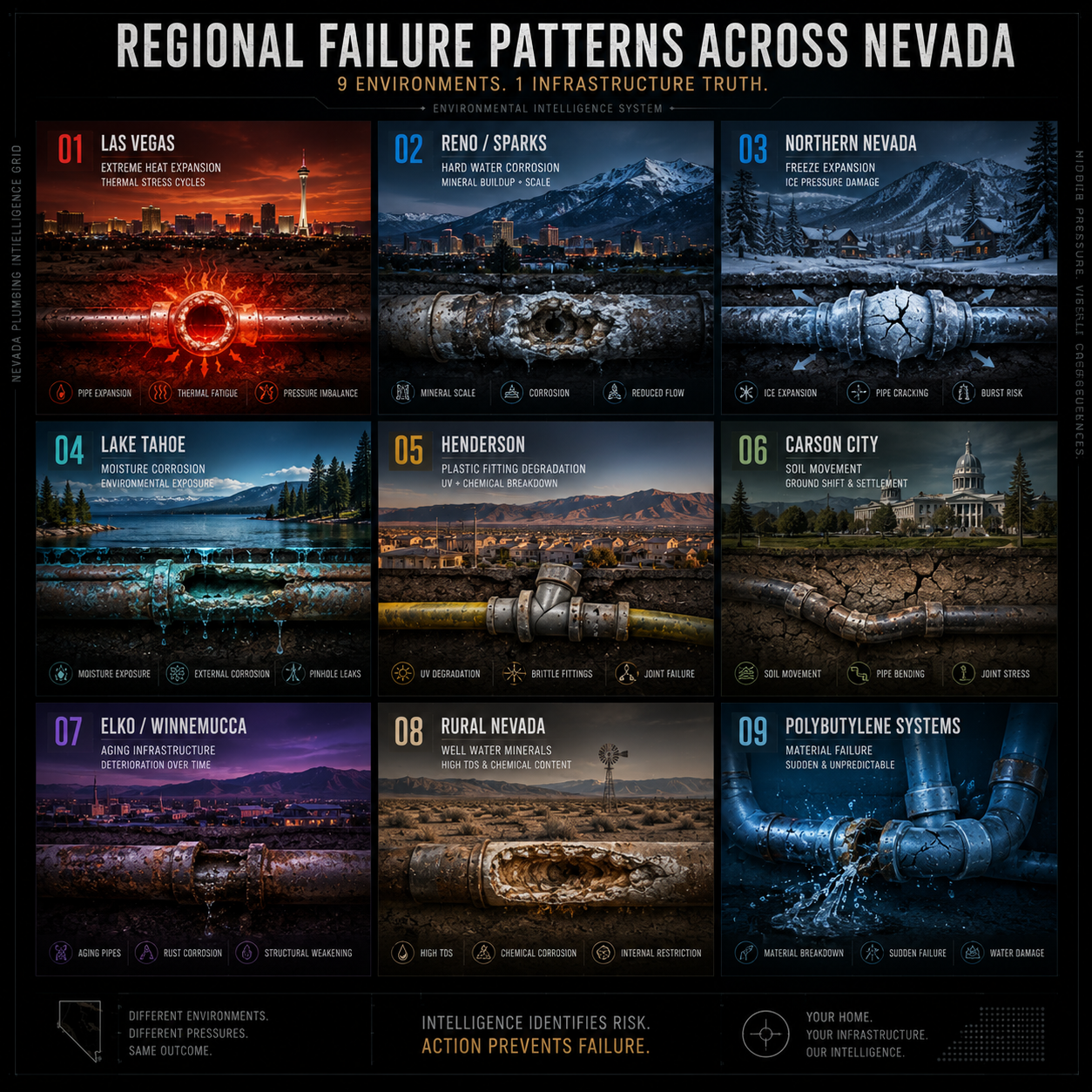
What Illinois Contractors Commonly See First
Experienced Illinois plumbers rarely begin with the visible symptom alone.
Recurring service patterns usually point toward broader infrastructure behavior.
One homeowner notices fluctuating shower pressure.
Another sees recurring basement moisture.
Some experience slow drainage during heavy rain periods.
Others hear pipe movement inside walls during temperature swings.
Those signals often connect back to larger environmental conditions affecting the property.
Contractors throughout Illinois repeatedly identify these recurring warning indicators:
- Pressure fluctuation after seasonal changes
- Basement moisture near utility penetrations
- Rust-colored water from aging galvanized lines
- Recurring drain backups during storms
- Foundation cracking near plumbing corridors
- Corroded shutoff valves and fittings
- Water heater stress from mineral accumulation
- Sewer intrusion from root expansion
- Pipe separation after freeze-thaw cycles
- Hidden slab leaks beneath finished flooring
Visible damage usually arrives late in the sequence.
System instability often begins years earlier.
Illinois Plumbing Failure Is Usually Slow Until It Isn’t
Most residential plumbing failures across Illinois develop quietly.
Small shifts accumulate underground.
Pressure changes intensify gradually.
Corrosion advances internally long before leaks appear outside the pipe.
Drainage fatigue worsens beneath neighborhoods without obvious warning signs.
Then one event exposes the entire system condition at once.
A freeze cycle ruptures weakened piping.
Heavy rain overwhelms aging drainage infrastructure.
Pressure spikes trigger hidden fittings failures.
Foundation movement separates underground lines already under stress.
Sudden failure often looks random to homeowners.
Contractors usually recognize the pattern immediately.
Illinois homes operate inside overlapping environmental systems.
Weather exposure, infrastructure age, soil behavior, groundwater pressure, and construction history all interact together beneath the surface.
Understanding those layers helps homeowners identify risk earlier.
Better plumbing decisions start with recognizing the environment the home exists inside.