sinkholeSF22 — Movement + Moisture + Age: The Failure Stack
Nothing failed all at once.
It stacked.
Movement stressed the system.
Moisture accelerated the breakdown.
Age removed the margin.
Then it collapsed.
In 1995, a failure in San Francisco wasn’t caused by a single event.
A ~100-year-old sewer line gave out during heavy rain—but the rain wasn’t the cause.
It was the trigger.
The real failure was already built into the system:
- Old materials under constant load
- Water moving outside intended paths
- Ground shifting around a rigid structure
That combination doesn’t fail immediately.
It compounds.

SYSTEM VS SYMPTOM BREAKDOWN
What people call “the problem” is usually just the last stage.
What shows up:
- Sinkholes
- Foundation cracks
- Sudden pipe breaks
- Flooding events
What actually exists:
- Long-term pipe degradation
- Subsurface water escape
- Soil destabilization
- Structural load imbalance
The visible issue is the release point.
Not the origin.
FAILURE ORIGIN (NOT VISIBLE DAMAGE)
Failure begins at the system level.
Always.
Pipes are not isolated components.
They are part of a continuous network under stress.
In environments like San Francisco Bay Area:
- Soil expands and contracts
- Moisture levels fluctuate seasonally
- Infrastructure exceeds its intended lifespan
That creates a failure stack:
Movement
- Ground shifts apply lateral stress
- Rigid pipes resist, then fatigue
Moisture
- Small leaks saturate surrounding soil
- Soil loses compaction and load capacity
Age
- Materials thin, corrode, and weaken
- Joints lose integrity
None of this is visible at the surface.
But all of it is active.
WHY REPAIRS DON’T SOLVE UNDERLYING CONDITIONS
Repairs isolate a moment.
They don’t address the system.
Fixing a single pipe section:
- Doesn’t stop ground movement
- Doesn’t reverse material aging
- Doesn’t correct pressure inconsistencies
It only restores function temporarily.
Then the system reasserts itself.
The failure stack is still there:
- Same soil conditions
- Same moisture patterns
- Same aged materials nearby
So the next weakest point fails.
That’s why repeated repairs happen in cycles.
Each fix is reactive.
None of them are corrective.
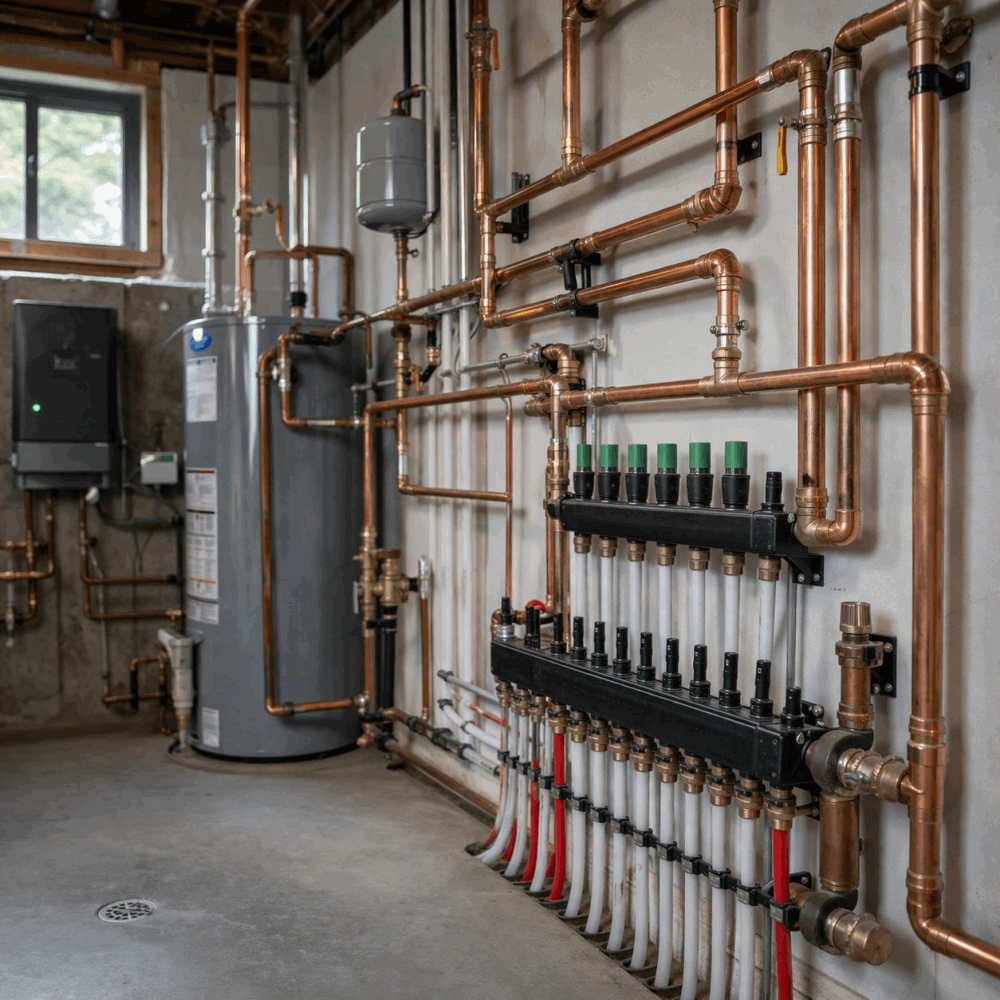
SYSTEM ALIGNMENT VS PATCHWORK
A system either works as a whole or fails in parts.
Aligned system:
- Consistent materials across all lines
- Balanced pressure from entry to exit
- Proper flow without restriction or stress buildup
- Structural compatibility with surrounding soil
Patched system:
- Mixed materials with different expansion rates
- Uneven pressure zones
- Disrupted flow paths
- Stress concentrated at connection points
Patchwork introduces new variables.
Every connection becomes a potential failure point.
Especially in movement-heavy regions.
INFRASTRUCTURE → HOME (PATTERN TRANSLATION)
What happened at infrastructure scale applies directly to residential systems.
Sinkhole event → Home system failure
- Sewer line collapse → Main drain line failure
- Soil void formation → Slab support loss
- Water migration underground → Crawlspace or foundation saturation
- Structural collapse → Floor deflection and cracking
The environment doesn’t differentiate.
The same forces act at every scale.
THE FAILURE STACK IN REAL HOMES
Most homes in aging areas are already inside this stack.
They just haven’t reached the release point yet.
Indicators show up as:
- Recurring leaks in different locations
- Fluctuating water pressure
- Unexplained moisture in soil or crawlspaces
- Minor foundation movement
These are not isolated issues.
They are system signals.

THE DECISION: REMOVE THE STACK OR MANAGE IT
There are two paths:
Continue repairing symptoms:
- Fix leaks as they appear
- Accept recurring disruption
- Operate inside a degrading system
Or remove the failure stack entirely.
REPIPE AS STRUCTURAL PREVENTION
A full repipe is not about upgrading pipes.
It’s about eliminating the conditions that create failure.
- Removes aged materials across the system
- Restores uniform pressure and flow
- Eliminates hidden weak points
- Aligns the system with environmental conditions
It resets the system before the release point.
Before collapse.
Before structural damage.
Because once the failure becomes visible—
the system has already been compromised.