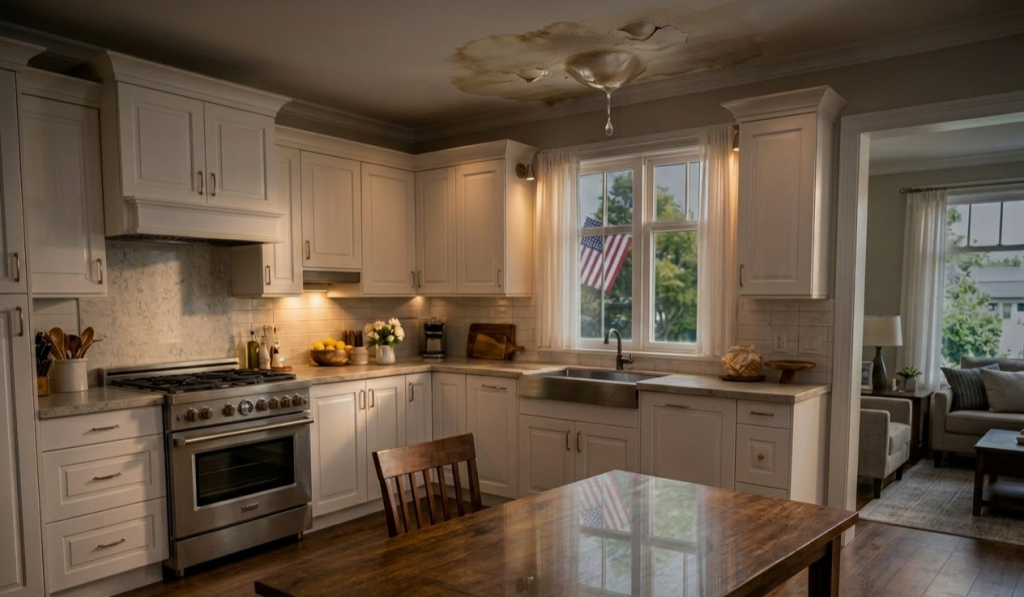
Wilmington Coastal Humidity Accelerating Plumbing Corrosion
How This Helps Homeowners
This page helps homeowners in Wilmington recognize how coastal humidity quietly accelerates plumbing corrosion long before visible failure occurs.
Most systems continue operating while deterioration spreads across fittings, valves, and internal pipe walls.
Understanding this pattern allows homeowners to:
- identify corrosion before it becomes a leak
- recognize why “isolated” failures keep repeating
- avoid reactive repairs that miss system-wide degradation
- make informed decisions about repair vs. full system correction
- reduce the risk of hidden water damage and pressure instability
The objective is early awareness.
Because corrosion in coastal environments is rarely sudden.
It is continuous, layered, and predictable.
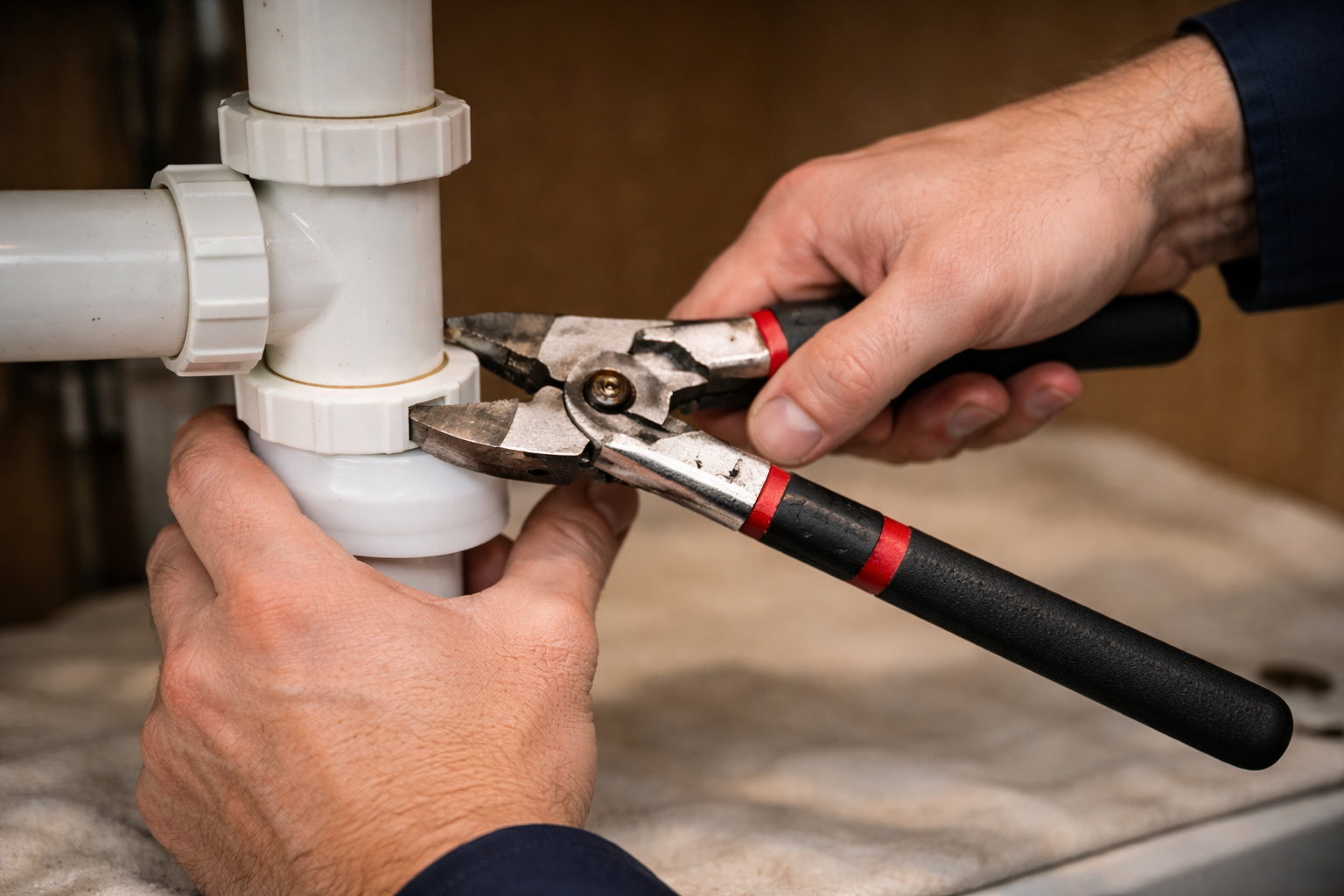
Wilmington — Coastal Humidity Corrosion Environment
Failure Stack
- Coastal Salt / Humidity Corrosion
- Elevated Ambient Moisture Exposure
- Legacy Material Degradation
- Mixed-Material Connection Stress
- Internal Corrosion from Water Chemistry (localized)
- Demand Load Stress on Aging Systems
Result
Wilmington plumbing systems degrade from both the outside and inside simultaneously.
Humidity introduces continuous surface-level corrosion.
Airborne salt accelerates oxidation at connection points.
Older materials weaken under constant exposure.
Internal chemistry may further degrade pipe walls.
This creates a dual-direction failure pattern.
The system deteriorates externally at visible connection points while internal integrity declines out of sight.
The Wilmington Coastal Effect
Humidity Becomes a Constant System Stressor
Homes in Wilmington experience sustained exposure to humid coastal air moving inland from the Delaware River and nearby Atlantic-influenced weather systems.
That moisture does not remain outside.
It enters crawlspaces, basements, wall cavities, and mechanical areas.
Over time, this creates a persistent corrosion environment affecting:
- exposed copper piping
- shutoff valves and angle stops
- threaded fittings and unions
- pipe supports and fasteners
- water heater components
- expansion tanks and connectors
The process is gradual.
Surfaces oxidize slowly, often without immediate performance issues.
That delay creates false confidence in system condition.
External Corrosion vs Internal Integrity
Two Failure Paths Develop at the Same Time
Wilmington homes often experience corrosion in two directions.
External corrosion develops where humid air contacts metal components.
Internal corrosion may occur depending on water chemistry conditions, particularly in older systems or properties with variable municipal or well water characteristics.
These two processes do not always progress at the same speed.
A pipe may appear intact externally while thinning internally.
A valve may show visible corrosion while internal piping continues to degrade elsewhere.
This disconnect makes diagnosis difficult without system-level evaluation.
The visible issue is often only one part of a broader corrosion pattern.
Legacy Systems Under Coastal Exposure
Older Materials Accelerate Faster in Humid Environments
Many Wilmington homes contain legacy plumbing systems that were not designed for prolonged high-humidity exposure.
Common materials include:
- aging copper supply lines
- galvanized piping in older properties
- cast iron drainage systems
- mixed-material retrofits from past renovations
Humidity accelerates deterioration across all of these materials.
Galvanized pipes corrode internally and externally.
Copper systems may develop pinhole leaks over time.
Cast iron drains weaken as corrosion advances along pipe walls.
When newer materials are connected to older infrastructure, the difference in condition can create additional stress at transition points.
That imbalance increases the likelihood of localized failure.
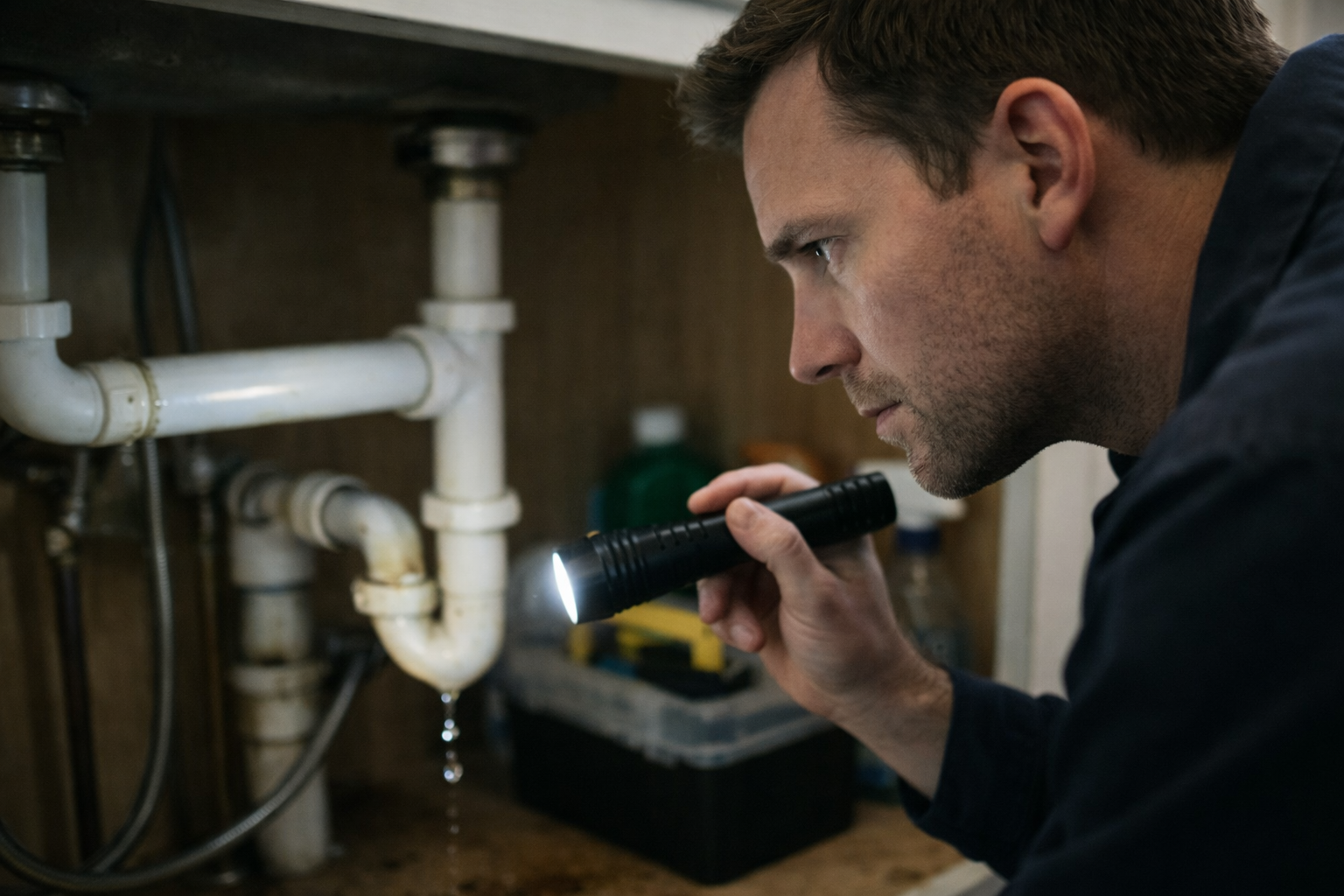
Crawlspaces and Basements as Corrosion Zones
Enclosed Moisture Environments Intensify the Problem
Many Wilmington homes rely on crawlspaces or basements where humidity becomes trapped.
Ventilation may be limited.
Moisture accumulates and remains present for extended periods.
These areas often contain:
- primary water distribution lines
- shutoff systems
- drain connections
- sump systems
- water heaters
Because these spaces are not frequently inspected, corrosion can advance significantly before detection.
By the time a homeowner notices a problem, multiple components may already be compromised.
Water Chemistry Interaction
Internal Degradation Can Mirror External Corrosion
In some Wilmington properties, water chemistry contributes to internal pipe deterioration.
Aggressive or slightly acidic water conditions can slowly wear down pipe walls.
Unlike mineral buildup, which restricts flow, this process reduces structural strength.
Over time, small perforations may develop.
These often appear as recurring leaks in different locations rather than a single failure point.
The pattern reflects system-wide degradation rather than isolated defects.
Demand Load and System Stress
Modern Usage Accelerates Corrosion Impact
Today’s plumbing systems operate under higher demand than many Wilmington homes were originally designed to handle.
Additional fixtures, higher-capacity appliances, and increased daily usage create continuous system stress.
This affects corrosion in two ways.
Higher flow rates increase friction inside piping.
Frequent use reduces recovery time between pressure cycles.
Corroded systems are less capable of handling these demands.
As a result, deterioration progresses more quickly once it reaches a certain threshold.
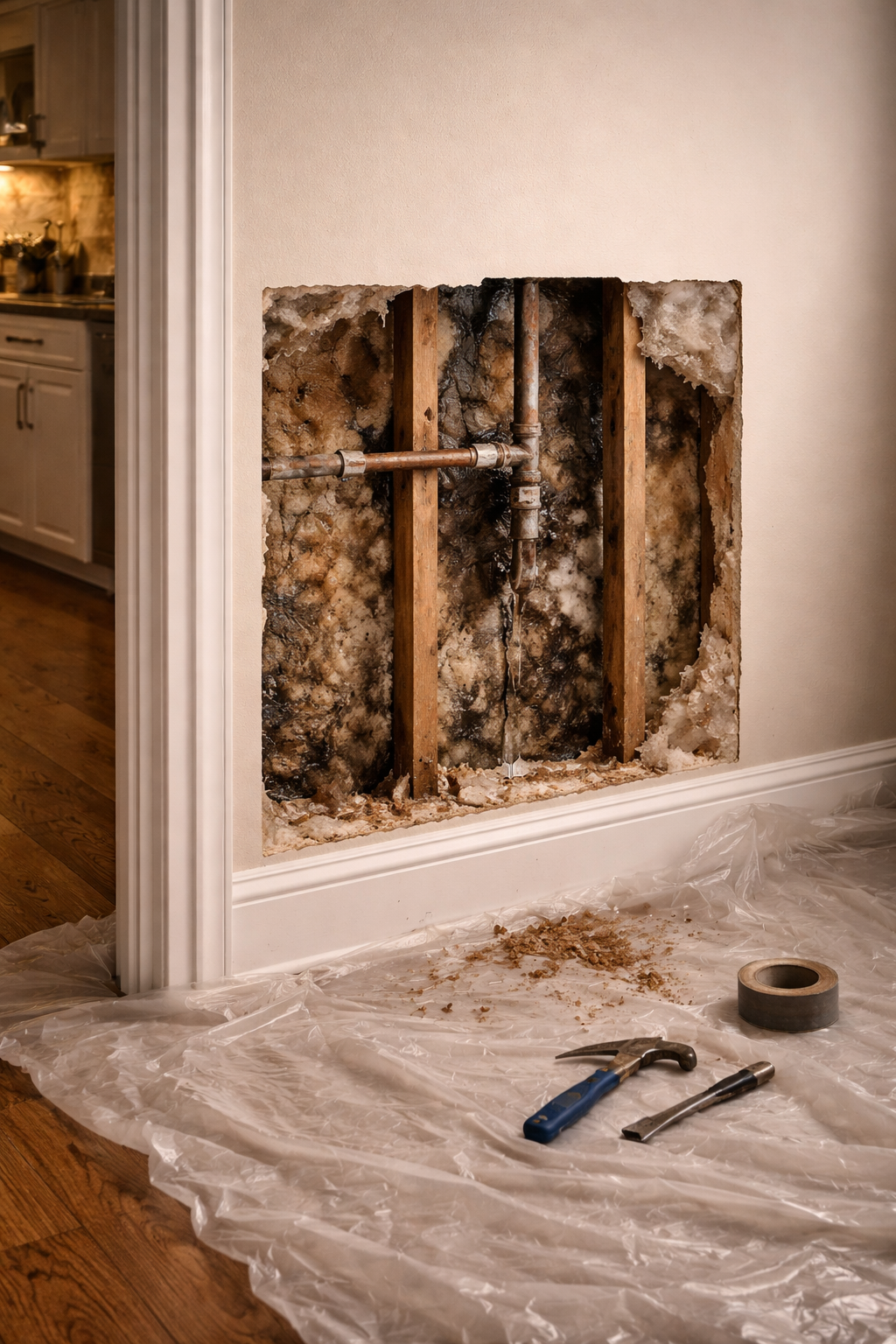
Common Wilmington Corrosion Signatures
What Homeowners Typically Notice
Corrosion-driven plumbing systems tend to show consistent patterns over time.
Homeowners in Wilmington may observe:
- recurring small leaks at different locations
- visible corrosion on valves and exposed piping
- pressure inconsistency between fixtures
- discolored water during initial flow
- premature failure of water heater components
- fittings that degrade faster than expected
- repeated need for localized repairs
These are not isolated issues.
They reflect underlying system-wide exposure to a corrosive environment.
Why Repairs Often Fail to Solve the Problem
Local Fixes Do Not Address System Conditions
In corrosion-driven environments, repairing a single component does not stop the process.
Replacing one valve does not change ambient humidity.
Fixing one leak does not correct internal pipe degradation.
Upgrading one section does not stabilize the entire system.
The environment continues to act on the remaining infrastructure.
That is why many homeowners experience repeated failures over time.
The system condition remains unchanged.
Final Positioning Statement
Wilmington plumbing systems do not fail from one event.
They degrade under continuous coastal humidity exposure that affects both external components and internal pipe structure.
Corrosion develops slowly, spreads across the system, and eventually reveals itself through recurring issues.
What appears to be a series of isolated problems is usually a single environmental condition expressing itself across multiple points.