



North Las Vegas Sewers: Why Clay Soil Causes Line Collapse
Most sewer failures do not begin with a sudden collapse.
In many Southern Nevada neighborhoods, the process starts underground years earlier.
Soil shifts slowly.
Moisture levels fluctuate seasonally.
Heat expansion changes subsurface pressure conditions.
Tiny separations develop inside aging sewer lines beneath the property.
Meanwhile, the surface often appears completely normal.
Across North Las Vegas and surrounding Southern Nevada regions, expansive clay soil has become one of the most important hidden contributors to underground sewer instability.
That same environmental behavior now affects portions of:
- North Las Vegas
- older central Las Vegas zones
- Pahrump
- Mesquite
- Laughlin
- expanding edge-development suburbs throughout Clark County
The environmental pattern changes slightly between regions.
The underground stress behavior remains surprisingly similar.

How This Helps Homeowners
Many homeowners assume sewer line failures happen randomly.
In reality, Southern Nevada sewer deterioration often follows predictable environmental patterns tied to:
- clay soil movement
- thermal expansion
- rapid desert drying cycles
- settlement shifting
- aging infrastructure
- root intrusion
- long-term underground stress accumulation
This page helps homeowners better understand:
- why sewer lines begin separating underground
- how Southern Nevada soil affects buried plumbing systems
- why recurring drain backups may signal structural pipe movement
- which regions experience elevated underground instability
- when repeated sewer repairs may indicate broader line deterioration
Understanding those patterns earlier can help homeowners avoid years of repetitive excavation and recurring underground damage.
Why North Las Vegas Experiences Elevated Sewer Stress
Large portions of North Las Vegas were built rapidly during major suburban expansion cycles.
Many neighborhoods contain:
- slab-on-grade homes
- aging sewer laterals
- expansive clay-heavy soil
- high summer heat exposure
- settlement-prone grading
- long underground pipe runs
Clay soil behaves differently than stable compact rock environments.
Moisture changes cause expansion and contraction underground.
Desert drying intensifies shrink-swell movement.
Over time, that movement slowly affects buried sewer stability.
Tiny separations begin forming at joints.
Pipe alignment gradually shifts.
Slope consistency changes underground.
Eventually, sewer flow becomes disrupted.
Why Clay Soil Becomes Dangerous Underground
Expansive clay soil moves more than many homeowners realize.
Southern Nevada heat cycles create constant environmental fluctuation beneath the property.
During moisture exposure, clay expands.
During dry periods, the soil contracts.
Repeated movement slowly stresses underground sewer systems year after year.
This becomes especially problematic around:
- older clay sewer lines
- cast iron systems
- aging ABS transitions
- poorly compacted trench zones
- long lateral sewer runs
Over time, movement may contribute to:
- pipe cracking
- line separation
- belly formation
- offset joints
- root intrusion points
- recurring sewer backups
The visible drain problem often begins long after underground instability already exists.
North Las Vegas Drainage Expansion Problems
Certain North Las Vegas neighborhoods experience additional stress caused by rapid development history.
Fast suburban growth often created:
- accelerated utility installation timelines
- inconsistent soil compaction
- long production-build sewer systems
- aging infrastructure entering mid-life simultaneously
Many homes built during similar periods now experience overlapping sewer deterioration timelines.
Homeowners may first notice:
- slow drains
- repeated backups
- sewer odor
- foundation-adjacent moisture
- shifting cleanout behavior
- recurring hydro-jetting needs
Meanwhile, underground line movement may already be progressing quietly beneath the property.
Pahrump Underground Movement Conditions
Pahrump experiences a different version of the same environmental pattern.
The valley contains:
- dry expansive soils
- large temperature swings
- settlement-prone terrain
- long private sewer and septic transitions
- aggressive desert expansion cycles
Longer underground runs create additional stress exposure.
As properties settle gradually over time, underground sewer alignment may slowly shift.
Homeowners in Pahrump often experience:
- recurring drain interruption
- line sagging
- underground separation
- root intrusion near older systems
- trench settlement movement
The desert environment itself becomes part of the infrastructure condition.
Mesquite Soil Expansion And Infrastructure Stress
Mesquite presents another important Southern Nevada infrastructure pattern.
Extreme heat exposure combines with:
- desert soil instability
- hard water conditions
- thermal expansion cycling
- aging suburban infrastructure
Many buried sewer systems experience years of underground expansion and contraction before visible symptoms emerge.
Drain systems may initially continue functioning while:
- joints separate slowly
- bedding shifts underground
- line slope changes incrementally
- stress accumulates beneath the structure
Eventually, homeowners begin seeing recurring sewer interruption despite multiple repair attempts.
At that stage, the broader underground movement pattern often becomes easier to identify.
Laughlin Environmental Infrastructure Exposure
Laughlin introduces additional environmental complexity through extreme heat and shifting terrain conditions near the Colorado River corridor.
These environments may experience:
- aggressive thermal expansion
- soil instability
- moisture fluctuation
- settlement shifting
- aging underground infrastructure stress
Some properties encounter underground movement tied to both heat cycling and gradual terrain adjustment over time.
Recurring sewer issues in these regions often involve more than isolated blockage alone.
Line stability itself may already be compromised underground.
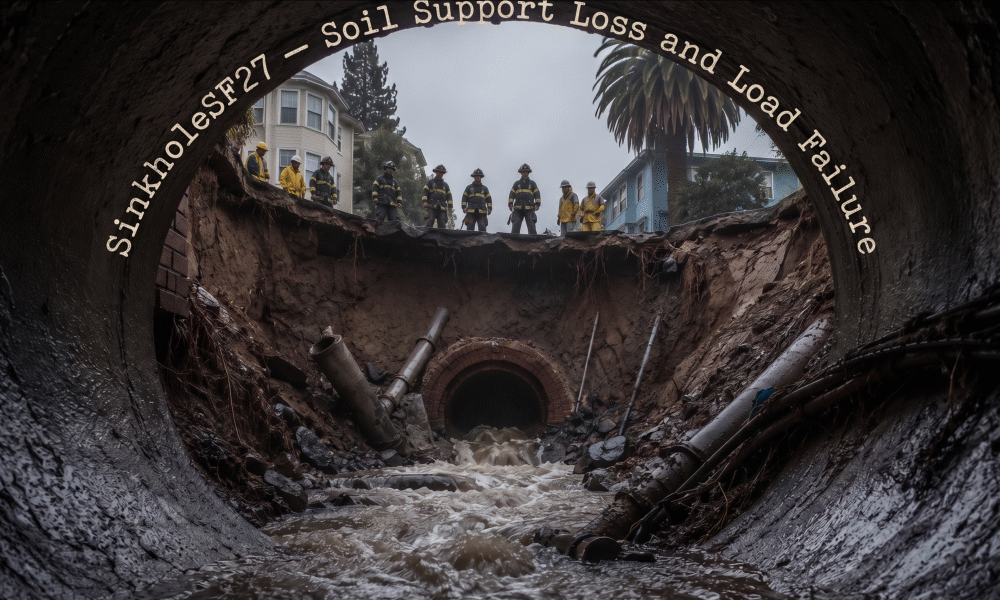
Why Sewer Collapses Often Happen Gradually
Most underground sewer failures progress through stages.
Rarely does a healthy line suddenly collapse without prior stress accumulation.
The progression often looks like this:
Stage 1 — Underground Movement
Clay expansion and contraction slowly shift buried pipe sections.
Stage 2 — Joint Separation
Tiny offsets begin forming underground.
Stage 3 — Drain Interruption
Flow consistency changes.
Minor backups begin appearing intermittently.
Stage 4 — Structural Weakness
Pipe walls weaken.
Bellies develop.
Root intrusion increases.
Stage 5 — Collapse Or Major Separation
At this point, excavation often becomes unavoidable.
Most homeowners only become aware during the later stages.
The underground instability itself usually began years earlier.

Why Southern Nevada Creates Unique Sewer Conditions
Southern Nevada infrastructure behaves differently from many other parts of the country.
Environmental stress combines several overlapping factors:
- extreme heat
- expansive clay soil
- rapid suburban development
- slab-on-grade construction
- aging utility systems
- long-term drought cycling
- settlement movement
That combination creates recurring underground sewer behavior across multiple Southern Nevada communities simultaneously.
The environmental pattern is regional.
Not isolated to one neighborhood alone.
Warning Signs Homeowners Should Watch For
Certain conditions may indicate underground sewer instability already developing beneath the property.
Common warning signs include:
- recurring drain backups
- multiple hydro-jetting visits
- sewer odor near the home
- soft spots in landscaping
- recurring slab moisture
- slow drains throughout the property
- shifting cleanout performance
- repeated root intrusion
- sewer camera findings showing offsets or bellies
These symptoms often signal larger underground movement patterns rather than isolated blockage alone.
Why Regional Sewer Specialists Matter
Contractors familiar with Southern Nevada infrastructure often recognize patterns that differ substantially from other regions.
Regional specialists may evaluate:
- expansive clay soil behavior
- settlement-related sewer movement
- thermal expansion exposure
- rapid-build subdivision infrastructure
- underground lateral shifting
- long-term desert soil instability
That environmental understanding changes how sewer deterioration gets interpreted.
A recurring backup in North Las Vegas may involve very different infrastructure behavior than a freeze-related sewer collapse in the Midwest or saturation-heavy sewer deterioration along the Gulf Coast.
Regional conditions matter underground.
Most Sewer Line Failures Begin Quietly
Underground deterioration usually develops slowly.
Movement accumulates gradually beneath the property.
Pipe stress increases year after year.
Tiny separations slowly expand underground.
By the time excavation becomes necessary, the environmental pressure affecting the sewer line may have existed for a decade or longer.
That is why clay soil movement matters so heavily across North Las Vegas, Pahrump, Mesquite, Laughlin, and many surrounding Southern Nevada communities.