



Cross-System Integration Risks in Residential Plumbing Systems
Cross-system integration risks develop when plumbing interacts incorrectly with electrical, gas, or structural systems.
Most systems appear functional at installation.
Water flows.
Fixtures operate.
No immediate conflict is visible.
Across regions such as San Jose, Fremont, and Sacramento, integration risks often remain hidden until systems are modified or replaced.
In Las Vegas and Henderson, rapid development and layered installations increase the likelihood of misidentified or improperly connected systems.
Comparable risks appear in Chicago, Boston, and New York, where infrastructure complexity introduces overlapping system conditions.
Cross-system integration risks are not immediate failures.
They are latent system conflicts that emerge when conditions change or systems interact under load.
Core categories include:
- Pressure-driven failures
- Material degradation failures
- Corrosion and water chemistry failures
- Flow and distribution limitations
- Structural installation stress
- Drainage and venting imbalance
- Cross-system integration risks
Core Cross-System Failure Patterns
Integration risks follow predictable patterns tied to how plumbing interfaces with other systems.
Common conditions include:
- Water-to-gas cross-connections
- Electrical grounding disruption when replacing copper with PEX
- Improper system mapping during installation or repair
- Fixture misconfiguration across supply and drainage systems
- Pressure conflicts between interconnected systems
Each reflects a breakdown in system coordination rather than a single-system failure.
In Walnut Creek and Pleasanton, upgrades that replace copper lines can unintentionally remove grounding paths.
In Stockton and Bakersfield, misidentified lines in older homes increase the risk of improper connections.
Similar integration issues appear in Boston and Philadelphia, where layered infrastructure creates system overlap.

Western U.S. — System Upgrades, Material Transitions, and Infrastructure Overlap
In the Western United States, cross-system integration risks are often driven by upgrades and material transitions.
Across California, including San Jose, Oakland, Sacramento, and Santa Rosa, replacing copper with PEX can alter electrical grounding continuity.
Homes with multiple remodel phases often contain overlapping systems.
In Nevada, particularly Las Vegas, Henderson, and Reno, rapid construction and renovation cycles introduce variability in system mapping.
New installations may connect to older infrastructure without full alignment.
Coastal regions such as Monterey and San Francisco introduce additional complexity where environmental exposure affects multiple systems simultaneously.
Similar patterns appear in Phoenix and Salt Lake City, where rapid growth and system expansion increase the risk of integration.
Common Western integration risks include:
- Loss of electrical grounding during repipe transitions
- Improper connection between new and existing systems
- Incomplete system mapping in modified homes
- Pressure conflicts across partially upgraded systems
- Overlap between plumbing and structural components
These risks often remain undetected until failure occurs.
Southern U.S. — Rapid Expansion, Mixed Installations, and System Conflict
In Southern regions, cross-system integration risks are influenced by rapid development and mixed installation practices.
In Dallas, Houston, Austin, and San Antonio, large-scale development introduces systems installed at different times under varying standards.
Older and newer systems often coexist within the same structure.
In Atlanta and Charlotte, expansion and renovation create layered system conditions.
In Florida cities such as Miami, Tampa, and Orlando, moisture and environmental exposure affect multiple systems simultaneously.
Similar patterns appear in Phoenix and Las Vegas, where rapid growth increases system overlap.
Common Southern integration risks include:
- Mixed material systems create incompatibility
- Incomplete integration during renovation
- Pressure conflicts across system expansions
- Misalignment between plumbing and structural systems
- Increased risk of cross-connections in complex layouts
These conditions develop as systems evolve.
Northern U.S. — Aging Infrastructure and Multi-System Interaction
In Northern regions, cross-system integration risks are shaped by infrastructure age and long-term modification.
Cities such as Chicago, Minneapolis, Boston, and Buffalo have older systems that have been repeatedly modified.
Electrical, plumbing, and gas systems often intersect in confined spaces.
As upgrades occur, original system relationships may not be fully maintained.
This introduces hidden integration risks.
In Denver, elevation and system complexity add additional variables affecting system interaction.
Common Northern integration risks include:
- Disruption of grounding systems during upgrades
- Overlapping system routes in older structures
- Misalignment between the updated and original installations
- Increased interaction between systems in confined spaces
- Hidden cross-connections within aging infrastructure
These systems often contain multiple layers of modification.

Eastern U.S. — Density, Infrastructure Layering, and System Complexity
In Eastern and Mid-Atlantic regions, cross-system integration risks are driven by density and infrastructure layering.
In New York City, Philadelphia, Baltimore, and Washington, D.C., plumbing systems operate within highly complex environments.
Multiple systems coexist within a limited space.
Layered infrastructure increases the likelihood of interaction between systems.
Modifications over time introduce inconsistencies.
Similar patterns appear in Boston and other dense urban areas with high system complexity.
Common Eastern integration risks include:
- Cross-system interaction in dense infrastructure environments
- Misalignment between multiple system layers
- Increased potential for cross-connections
- Difficulty identifying system boundaries
- Pressure and flow conflicts across interconnected systems
These systems often exhibit localized integration issues.
Southeastern U.S. — Moisture, Environmental Exposure, and System Interaction
In Florida and the Southeast, cross-system integration risks are influenced by environmental exposure and system interaction.
Cities such as Miami, Fort Lauderdale, Tampa, Orlando, and Jacksonville experience conditions where moisture affects multiple systems simultaneously.
Humidity influences both plumbing and electrical components.
Corrosion and environmental stress increase the likelihood of integration issues.
Older systems may not align with newer installations.
Similar patterns appear in Houston and New Orleans, where moisture and system overlap affect performance.
Common Southeastern integration risks include:
- Moisture-driven interaction between plumbing and electrical systems
- Corrosion affecting multiple system components
- Increased risk of cross-connections in humid environments
- Misalignment between old and new installations
- Environmental impact on system coordination
These risks often remain hidden until conditions change.
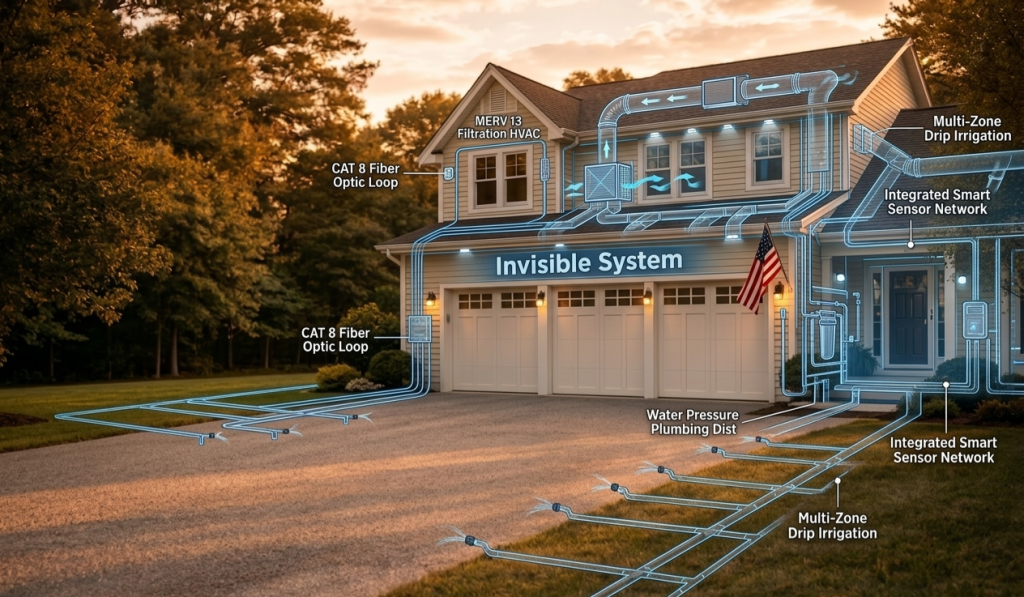
Why Cross-System Failures Are Often Delayed
Cross-system integration risks develop gradually rather than appearing immediately.
During normal operation:
- Systems function independently under a light load
- Interaction points remain stable
- Environmental exposure has a limited impact
- Pressure and flow conditions are consistent
Over time:
- Modifications alter system relationships
- Environmental conditions affect multiple systems
- Pressure and load increase interaction stress
- Material changes influence system behavior
In Fremont and San Mateo, these changes occur without visible signs.
In Las Vegas and Phoenix, rapid development increases integration complexity.
Across the Sacramento and Central Valley regions, system evolution introduces new interaction points.
This delay creates the appearance of stability.
Recognition Signals of Cross-System Integration Risk
Early indicators often appear before major failure.
- Unexplained system behavior across multiple utilities
- Electrical issues following plumbing work
- Gas or water anomalies after system modification
- Inconsistent fixture performance
- Recurring issues that do not align with a single system
In Walnut Creek and Pleasanton, these signals often follow upgrades.
In Henderson and North Las Vegas, integration-related symptoms emerge in newer developments.
Across Sacramento and Stockton, system interaction issues develop gradually.
These signals indicate underlying integration risk.
Integration Behavior and System-Level Decision Making
Cross-system integration risks highlight the complexity of modern residential systems.
Homeowners often evaluate:
- Individual system performance
- Immediate repair needs
- Visible issues within a single system
These do not reflect system interaction.
Actual outcomes depend on:
- Alignment between plumbing, electrical, and gas systems
- Accuracy of system mapping
- Compatibility of materials and components
- Environmental influence on multiple systems
Integration behavior determines overall system stability.
Transition from Integration Risk to System-Level Correction
When integration risks become active, isolated repairs do not resolve underlying conditions.
At this stage:
- Multiple systems exhibit instability
- Failures occur across different utilities
- Safety concerns increase
- System reliability declines
What begins as a hidden risk becomes a multi-system failure.
Structured system correction addresses these conditions by:
- Re-mapping system layout
- Aligning plumbing with electrical and gas systems
- Eliminating cross-connections
- Standardizing installation practices
- Ensuring compliance with safety and code requirements
This approach restores coordinated system performance.
System Integration, Stability, and Long-Term Performance
Stable system integration supports overall property performance.
When systems are aligned:
- Safety risks decrease
- Performance becomes consistent across utilities
- Maintenance complexity is reduced
- Long-term reliability improves
- Property value is protected
In high-value markets such as Palo Alto, Walnut Creek, and coastal California, integration stability directly impacts property evaluation.
In rapidly growing regions like Las Vegas and Phoenix, coordinated systems reduce risk across entire developments.
Cross-system integration risks represent a critical system behavior across the United States.
They connect multiple systems into a single performance framework.
They explain how interactions between systems influence long-term outcomes.
Understanding system integration provides a foundation for evaluating residential systems based on coordination and compatibility rather than isolated performance.
It allows decisions to be made with clarity, grounded in how systems operate together under real conditions.