
Las Vegas vs Miami — Hard Water Slab Leaks vs Coastal Pipe Corrosion
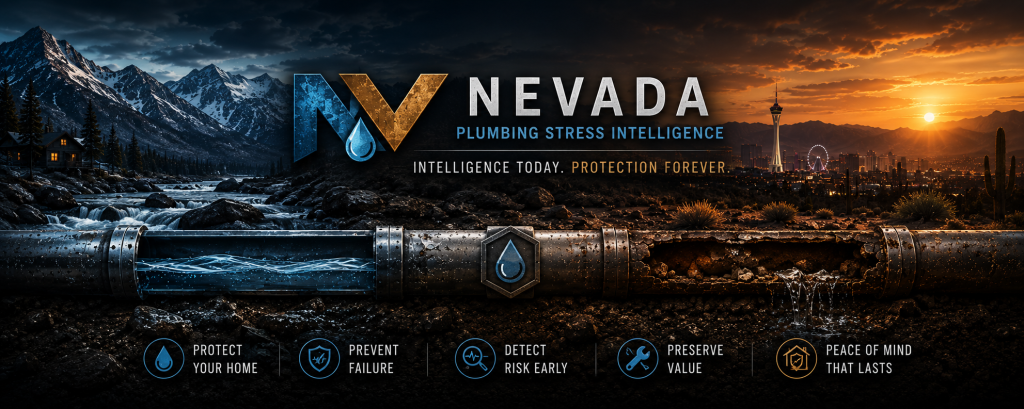
Desert Mineral Pressure Meets Coastal Corrosion Saturation
Two warm-weather cities.
Two completely different plumbing failure environments.
Las Vegas homes absorb long-term mineral pressure from aggressive hard water exposure, slab expansion, and heat-driven infrastructure stress.
Miami properties battle continuous coastal corrosion caused by salt air, humidity, groundwater exposure, and accelerated material deterioration.
One region slowly constricts plumbing systems from within.
The other aggressively corrodes infrastructure from the outside inward.
Both environments create hidden water damage risk.
Failure progression follows entirely different environmental behavior.
First Quarter — Environmental Pressure
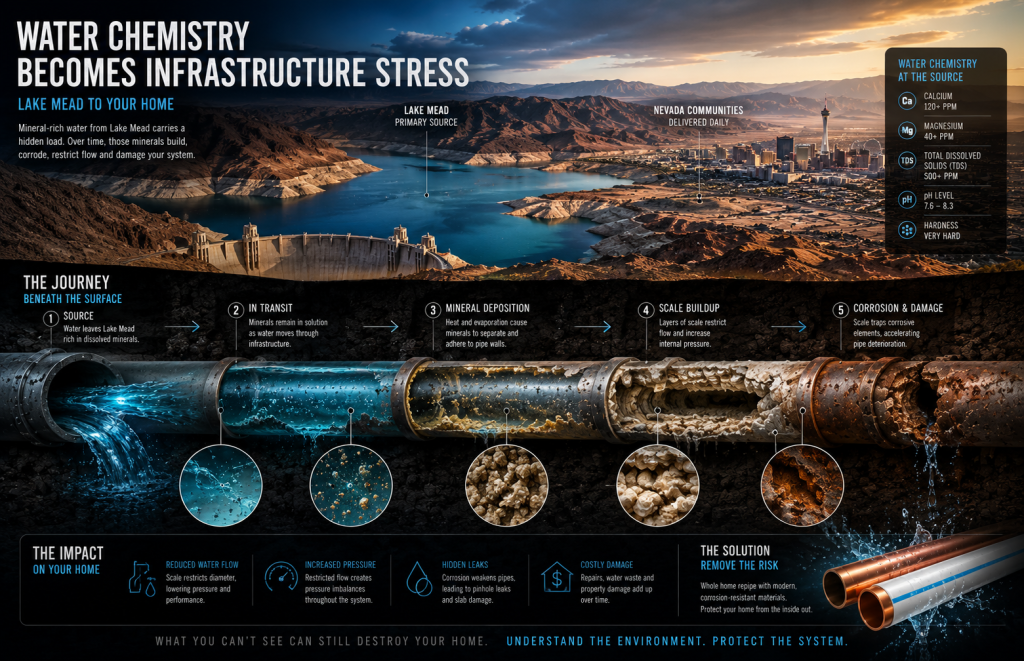
Across Las Vegas, mineral-heavy water constantly moves through residential plumbing systems.
Hard water exposure gradually deposits calcium and scale buildup inside:
- Copper supply lines
- Water heaters
- Fixtures
- Pressure regulators
- Underground plumbing pathways
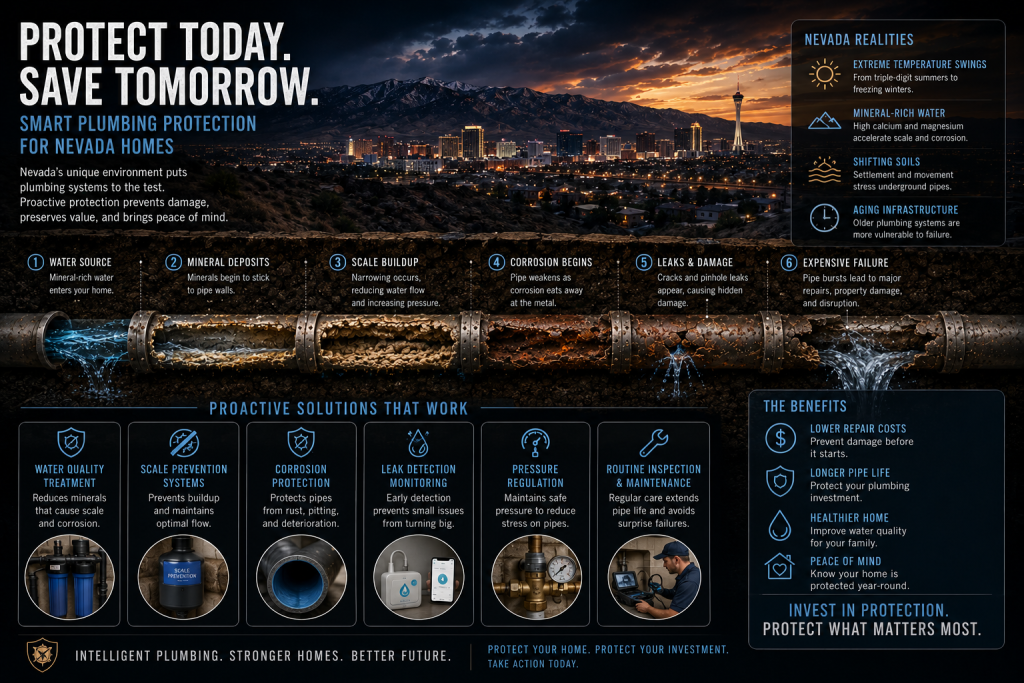
Extreme desert heat intensifies the pressure environment further.
Long thermal cycles dry the soil beneath slab-on-grade neighborhoods throughout Summerlin, Henderson, and expanding master-planned communities across the valley.
Movement pressure and mineral restriction slowly destabilize plumbing systems beneath the structure.
Along Miami’s coastline, the environmental pressure behaves completely differently.
Salt-heavy air combines with:
- Coastal humidity
- High groundwater levels
- Ocean moisture exposure
- Flood-zone saturation
- Warm tropical temperatures
- Storm-driven moisture intrusion
Rather than constricting plumbing internally, corrosion gradually attacks exposed materials from the surrounding environment.
Desert mineral pressure defines Las Vegas.
Coastal corrosion pressure defines Miami.
Second Quarter — Plumbing Stress
Inside many Las Vegas homes, hard water slowly narrows plumbing pathways over time.
Scale accumulation increases internal pressure across aging systems.
Flow restriction places additional stress on joints, fittings, and underground supply lines.
Common Las Vegas plumbing conditions include:
- Slab leaks
- Pipe scaling
- Pressure imbalance
- Water heater fatigue
- Underground copper deterioration
- Expansion-related plumbing stress
Luxury developments throughout Summerlin and Lake Las Vegas often experience elevated plumbing demand due to larger square footage, multiple bathrooms, irrigation systems, and high-consumption fixtures.
Across Miami, corrosion develops through long-duration moisture exposure instead.
Salt air and humidity accelerate deterioration across:
- Copper piping
- Exterior plumbing systems
- Mechanical rooms
- High-rise utility systems
- Coastal condominium infrastructure
- Underground pipe networks
Many Miami apartment towers and waterfront condominium buildings face recurring corrosion exposure as moisture penetrates structural and mechanical systems over time.
Mineral restriction shapes Las Vegas plumbing failures.
Salt corrosion shapes Miami’s.
Third Quarter — Structural Escalation
Las Vegas water damage often escalates quietly beneath the slab.
Small underground leaks may continue spreading for months before visible symptoms appear inside the structure.
Over time, hidden seepage contributes to:
- Flooring distortion
- Cabinet damage
- Foundation moisture accumulation
- Mold growth
- Hydrostatic pressure beneath slabs
Movement stress and hard water restriction frequently compound one another.
Inside Miami structures, escalation develops through corrosion-driven deterioration.
Persistent coastal exposure weakens plumbing systems throughout:
- High-rise residential towers
- Waterfront properties
- Medical office campuses
- Hotel infrastructure
- Mechanical utility corridors
Warm humidity allows moisture to remain trapped inside walls, ceilings, and structural cavities for extended periods.
Storm surge and flood-zone exposure further intensify Miami’s moisture environment during tropical weather events.
Las Vegas escalates through mineral restriction and slab movement.
Miami escalates through corrosion and saturation exposure.
Fourth Quarter — Water Damage Outcome
Expansion-driven slab leaks create one form of restoration complexity.
Coastal corrosion creates another.
Las Vegas recovery often requires investigation beneath the structure itself.
Common concerns include:
- Slab leak detection
- Underground plumbing displacement
- Mineral scale buildup
- Foundation moisture mapping
- Pressure-regulation instability
Miami restoration frequently focuses on long-duration moisture and corrosion exposure.
Typical concerns include:
- Pipe replacement
- Mold remediation
- Salt-related material deterioration
- Wall cavity saturation
- Mechanical-system corrosion
- Flood-zone moisture intrusion
Luxury high-rises near Biscayne Bay face different structural exposure than slab-on-grade neighborhoods across the Las Vegas Valley.
Environmental behavior changes how water damage develops, spreads, and escalates.
Why This Matchup Matters
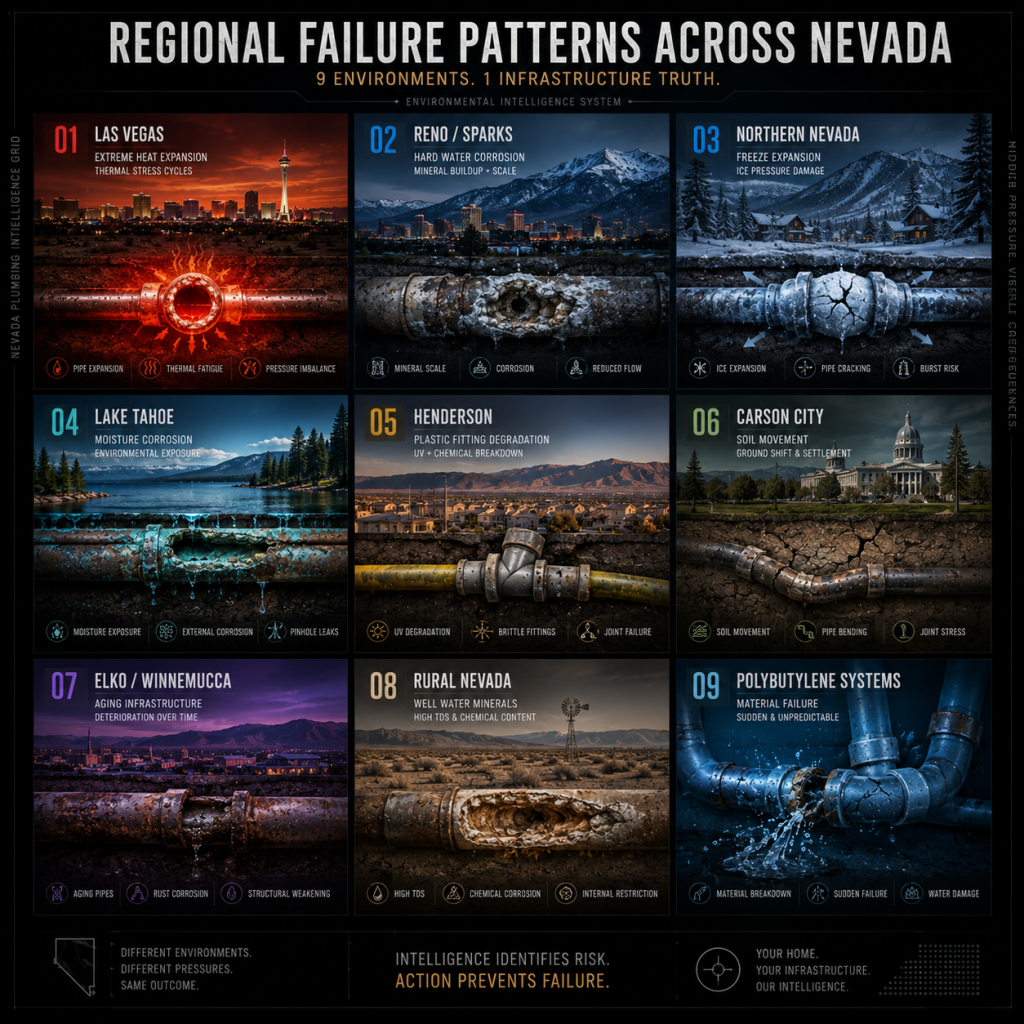
Water damage follows regional infrastructure pressure.
Environmental conditions determine:
- How plumbing systems fail
- Where hidden moisture spreads
- Which materials deteriorate first
- Why restoration complexity changes across climates
- How recurring structural exposure develops
Las Vegas infrastructure absorbs mineral pressure through hard water and desert expansion cycles.
Miami infrastructure absorbs corrosion pressure through coastal humidity and salt-air saturation.
Desert plumbing systems face internal restriction.
Coastal infrastructure battles external deterioration.
Different climates create different failure pathways.