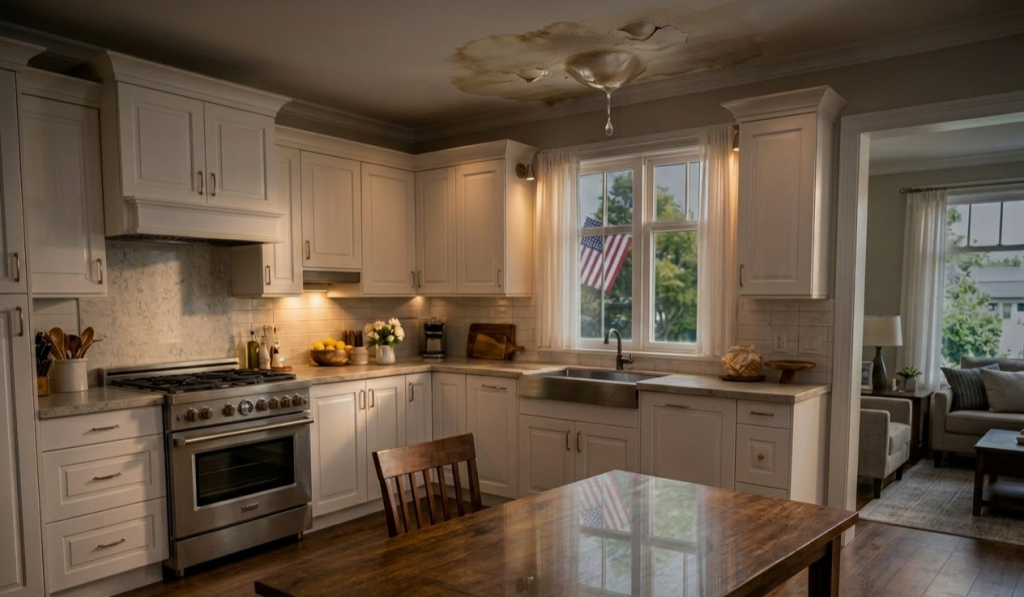
Why Bridgeport–Stamford Homes Develop Hidden Pipe Corrosion
This helps Bridgeport–Stamford homeowners identify early-stage corrosion inside plumbing systems before it leads to pressure loss, pinhole leaks, water damage, or full-system failure.
Most corrosion-related plumbing failures do not begin with visible rust or leaks.
They begin inside pipe walls where chemical, environmental, and infrastructure conditions slowly degrade the system over time.
Homes across southwestern Connecticut operate inside one of the most corrosion-prone residential environments in the Northeast.
Aging infrastructure.
Coastal exposure.
Water chemistry variation.
Mixed-material plumbing systems.
Long-term moisture conditions.
Each factor contributes to hidden pipe deterioration.
The visible leak is usually the final stage.
Why Corrosion Develops Differently in Bridgeport–Stamford
The Bridgeport–Stamford corridor combines multiple corrosion accelerators into one regional system:
- Older municipal water infrastructure
- Variable water chemistry across service areas
- Coastal humidity and salt exposure near Long Island Sound
- Dense housing with layered plumbing upgrades
- Basement-heavy construction with elevated moisture levels
- Mixed-era materials (galvanized, copper, brass, PVC transitions)
- High renovation and partial-repair activity
That combination creates internal pipe instability.
Most corrosion develops slowly and remains hidden until:
- Pressure drops
- Water discoloration appears
- Fixtures perform unevenly
- Leaks begin forming in weakened sections
By the time symptoms appear, the system degradation is often widespread.
The 5 Primary Corrosion Drivers in Southwestern Connecticut
1. Water Chemistry Instability
Corrosion often begins with the water moving through the system.
Water chemistry varies across Connecticut depending on source, treatment, and infrastructure condition.
Changes in:
- pH levels
- Dissolved oxygen
- Mineral content
- Treatment adjustments
- Sediment levels
can accelerate internal pipe breakdown.
Older infrastructure can also introduce particles and chemical variability into the system.
That variability increases corrosion activity inside:
- Copper lines
- Galvanized pipe
- Fittings and joints
- Water heater components
The process is gradual but continuous.
2. Aging Infrastructure Interaction
Much of the Bridgeport–Stamford region connects to aging municipal systems.
Some water mains in Connecticut date back more than a century.
As infrastructure ages, it contributes to:
- Sediment release
- Pressure fluctuation
- Chemical imbalance
- Oxidation exposure
- Internal scaling
Each of these conditions increases corrosion stress inside residential plumbing.
Homes do not operate independently.
They are extensions of the larger infrastructure system.
3. Coastal Air and Humidity Exposure
Proximity to Long Island Sound introduces a constant moisture and salt exposure layer.
Salt-laden air accelerates corrosion across:
- Copper systems
- Mechanical rooms
- Shutoff valves
- Exposed basement piping
- Exterior penetrations
Humidity increases condensation cycles inside basements and crawlspaces.
That moisture interacts with metal surfaces over time.
Corrosion often begins externally while also developing internally.
The dual exposure accelerates system degradation.
4. Mixed-Material System Conflict
Many homes across the region contain plumbing from multiple decades.
Common combinations include:
- Galvanized pipe connected to copper
- Copper connected to brass
- PVC transitions into older systems
- Push fittings and modern repairs layered into aging infrastructure
When dissimilar metals connect, electrochemical reactions can occur.
This process—often referred to as galvanic corrosion—accelerates deterioration at connection points.
The most vulnerable areas are usually:
- Transitions between materials
- Older fittings
- Valves and joints
- Repair locations
Corrosion concentrates at these weak points first.
5. Long-Term Moisture Environments
Basements play a major role in corrosion development across Connecticut homes.
Moisture conditions may include:
- Foundation seepage
- Condensation cycles
- Humidity accumulation
- Drainage imbalance
- Minor undetected leaks
Over time, these environments create ideal conditions for corrosion to accelerate.
Metal components remain exposed to moisture continuously.
Even small amounts of water exposure over long periods can significantly weaken plumbing systems.
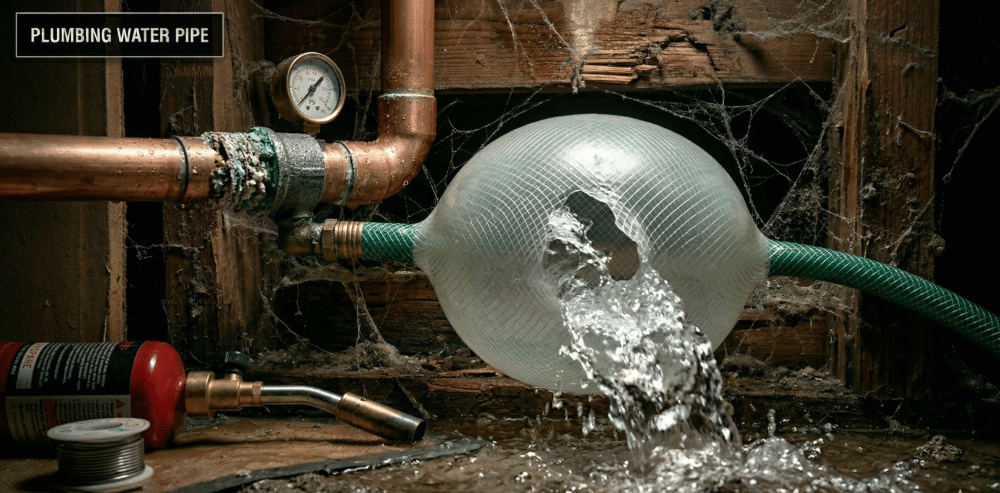
The Most Common Hidden Corrosion Patterns
Internal Copper Pitting
Copper pipes often fail from the inside out.
Small pinhole leaks develop after long-term internal corrosion.
Homeowners may notice:
- Tiny leaks appearing without warning
- Green or blue staining
- Metallic taste in water
- Pressure inconsistency
The pipe may appear intact externally until failure occurs.
Galvanized Pipe Closure
Older galvanized systems corrode internally and restrict flow.
The inside diameter of the pipe gradually narrows.
Common signs include:
- Reduced water pressure
- Uneven flow between fixtures
- Brown or rust-colored water
- Repeated clogs and buildup
In many cases, restriction is widespread before visible symptoms become obvious.
Connection-Point Failure
Corrosion frequently concentrates at system transitions.
These include:
- Copper-to-galvanized connections
- Valve connections
- Water heater fittings
- Repair joints
- Threaded connections
Leaks often begin at these points due to material incompatibility and stress concentration.
Water Heater Corrosion Exposure
Water heaters act as central corrosion points within residential systems.
Sediment buildup and internal tank corrosion can:
- Introduce particles into plumbing lines
- Increase system-wide wear
- Reduce efficiency
- Accelerate downstream pipe degradation
Failure inside the water heater often spreads effects throughout the system.
Why Corrosion Remains Hidden for Years
Corrosion does not behave like a sudden failure.
It develops through slow internal change:
- Pipe walls thin gradually
- Internal surfaces degrade
- Flow patterns shift
- Pressure behavior changes
- Weak points form silently
Most homeowners only see the final stage:
- A leak
- A burst
- Discolored water
- Sudden pressure loss
The actual corrosion process may have been active for years.
Why Spot Repairs Often Miss the Real Problem
Many homeowners repair individual leaks as they appear.
A pinhole gets patched.
A section gets replaced.
A fitting gets tightened.
Then another issue develops elsewhere.
That pattern occurs because corrosion is rarely isolated.
It typically affects the system broadly.
Spot repairs do not address:
- Internal pipe degradation
- System-wide material fatigue
- Water chemistry interaction
- Infrastructure-driven stress
- Moisture exposure conditions
Over time, repeated repairs become more frequent.
The system continues degrading underneath.
Bridgeport–Stamford Homes Operate Inside Corrosion Conditions
Corrosion is not random in southwestern Connecticut.
It follows identifiable patterns tied to:
- Infrastructure age
- Environmental exposure
- Water chemistry
- Material interaction
- Moisture conditions
Understanding these patterns allows homeowners to recognize early warning signs before failure escalates into:
- Structural water damage
- Mold growth
- Insurance claims
- Emergency plumbing events
- Full-system instability
Most corrosion-related plumbing failures begin long before they are visible.
Recognizing that timeline is what changes the outcome.