sinkholeSF07 — When Ground Gives Way in Dense Urban Zones
Urban Arrival Profile
Dispatch notes structural concern.
No visible fire. No active utility explosion.
Tight streets. Parked vehicles. Adjacent homes within feet.
Initial report sounds contained.
Dense urban layout says otherwise.
One failure point can impact multiple structures immediately.
Event Escalation Timeline
Phase 1: Subsurface System Breach (Hidden Initiation)
Aging sewer infrastructure fails under sustained pressure.
Heavy rainfall increases internal load.
Water exits the system and saturates surrounding soil.
Failure begins below visibility.
Phase 2: Lateral Soil Loss (Urban Spread Risk)
Water movement does not stay vertical.
It moves laterally beneath streets, sidewalks, and foundations.
Multiple properties begin losing support simultaneously.
Surface indicators remain limited.
Phase 3: Distributed Instability (Multi-Structure Exposure)
Ground integrity weakens across a wider footprint.
Structures share compromised soil zones.
Load transfer becomes unpredictable between adjacent properties.
Risk expands beyond the original failure point.
Phase 4: Surface Collapse (Rapid Failure Event)
Ground gives way at the weakest point.
Structure drops into the void.
Collapse happens without warning.
Shock load affects surrounding ground immediately.
Phase 5: Expansion Zone Activation (Secondary Collapse Threat)
Void continues to grow after initial failure.
Adjacent soil destabilizes further.
Additional collapse points may develop nearby.

Collapse Zone Risk
In dense urban zones, the collapse area is not isolated.
The visible sinkhole is only the center.
Risk extends under:
- Adjacent homes
- Sidewalks and roadways
- Utility corridors
Subsurface conditions are shared between structures.
This creates overlapping instability zones.
Edges are undefined.
Ground that appears intact may already be compromised.
Access Limitations for Responders
Urban density restricts movement.
Limited staging space for apparatus.
Narrow access routes reduce positioning options.
Ground instability eliminates close approach.
Operational limitations include:
- No safe positioning near the collapse edge
- Inability to deploy heavy equipment in tight corridors
- Unknown impact on underground utilities (gas, water, electrical)
- Risk of undermining adjacent structures during response
Perimeter control becomes the primary strategy.
Direct access is delayed.

Why Intervention Often Comes Too Late
Failure begins underground and spreads outward.
By the time surface collapse occurs, multiple systems are already compromised.
Response is triggered by visible damage.
But the system failure is already advanced.
Water continues moving beneath the site.
Soil continues to shift across property lines.
The environment is actively changing during response.
Stabilization cannot keep pace with degradation.
Urban Constraint: Shared System Exposure
Dense environments increase failure impact.
Structures are not isolated.
They rely on interconnected ground conditions and infrastructure.
One system breach affects multiple properties.
This creates:
- Faster escalation
- Wider collapse zones
- Greater responder risk
Failure is not contained.
Infrastructure-to-Residential Pattern Translation
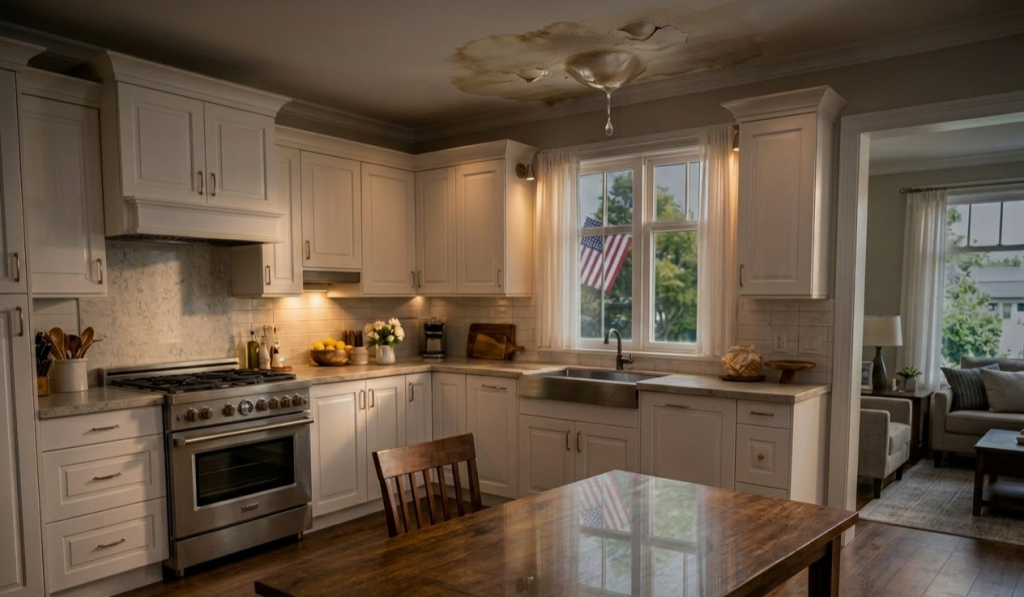
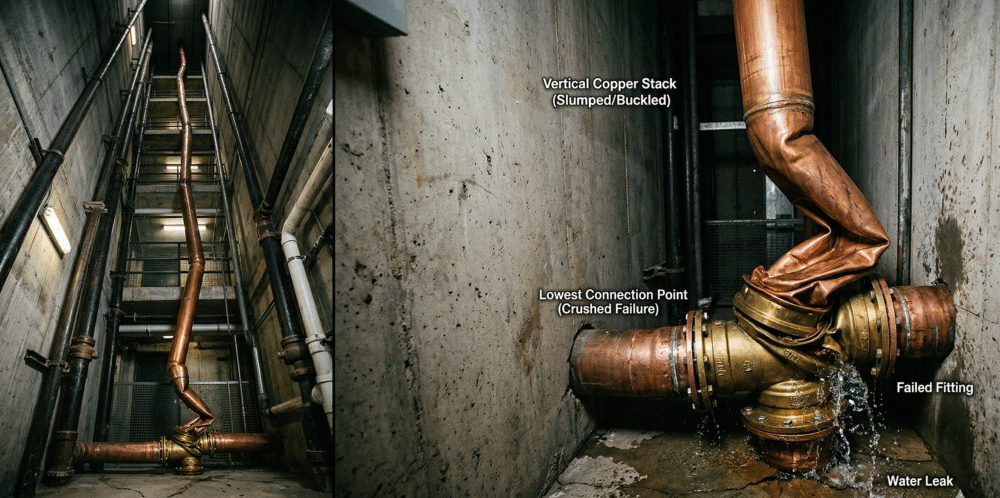
Urban infrastructure failure mirrors residential system behavior.
Same drivers. Different scale.
- Sewer breach → hidden leaks under homes
- Soil saturation → crawlspace or slab instability
- Lateral water movement → damage spreading beyond origin
- Sudden collapse → structural compromise
Homes in dense areas share risk through proximity.
Operational Constraints Summary
- Collapse zones extend beyond visible damage
- Adjacent structures are immediately at risk
- Limited access for responders due to density
- Continuous underground movement during response
- High probability of multi-point collapse
This is not a single-site incident.
It is a distributed failure environment.
Why Prevention Is the Only Reliable Control
Emergency response operates after instability is active.
In dense zones, response is further restricted.
You cannot isolate the system.
You cannot stabilize multiple properties in real time.
Control must occur before:
- Sewer systems exceed pressure limits
- Water movement saturates shared soil zones
- Hidden damage connects across structures
CTA — Prevent System Failure Before It Spreads
Once collapse begins in a dense environment, impact expands quickly.
Response becomes containment.
Not prevention.
Understand how underground plumbing systems are evaluated to prevent lateral soil loss and structural instability.
Learn how full-system repipe strategies reduce shared risk across properties.