Tucson Plumbing Systems Under Desert Pressure and Mineral Exposure
How This Helps Tucson Homeowners
Most plumbing failures in Tucson do not begin with a leak.
They begin with pressure building inside the system.
Heat stressing materials from the outside.
Minerals accumulating inside the pipe.
Dry soil shifting underneath the home.
By the time a homeowner sees visible damage, the system has often been under stress for years.
Understanding Tucson’s desert environment helps homeowners:
- recognize early-stage system stress before failure occurs
- identify mineral buildup and pressure imbalance inside pipes
- understand how heat and soil movement affect underground systems
- avoid repeated repairs that do not address root conditions
- see why fixtures and pipes fail faster than expected
- make better long-term decisions about treatment, rerouting, and full-system upgrades
The goal is not to react to plumbing problems.
The goal is to understand the conditions creating them.
Because in Tucson, plumbing systems fail under continuous environmental pressure.
Modeled from the national framework at Plumbing Whole Home Repipe Home Failure Intelligence.

Tucson Is A Desert Pressure Environment
Tucson plumbing systems operate in a dry, high-temperature environment where multiple stressors overlap.
Unlike humid regions, Tucson introduces a combination of:
- extreme heat exposure
- high mineral content water
- dry soil movement
- long-term drought conditions
- rapid urban expansion in some areas
- slab-on-grade construction
These forces act continuously.
The system is not failing from one issue.
It is responding to layered pressure.
Heat Applies Continuous External Stress
Tucson’s climate introduces sustained heat exposure across plumbing systems.
This affects:
- exterior piping
- attic runs
- wall cavities
- slab-adjacent systems
Heat causes:
- material expansion
- accelerated aging
- increased stress at joints
- weakening of pipe integrity
Daily temperature swings amplify this effect.
Expansion during the day.
Contraction at night.
Over time, this leads to:
- fatigue
- cracking
- joint instability
Hard Water Creates Internal System Restriction
Tucson water carries significant mineral content.
Primarily:
- calcium
- magnesium
These minerals accumulate inside pipes.
Creating scale.
Over time, this leads to:
- reduced internal diameter
- restricted flow
- increased pressure
- uneven system performance
The system must force water through narrower passages.
This creates internal stress.
Especially at:
- fittings
- valves
- bends
- older pipe sections
Scale turns a flow issue into a structural problem.
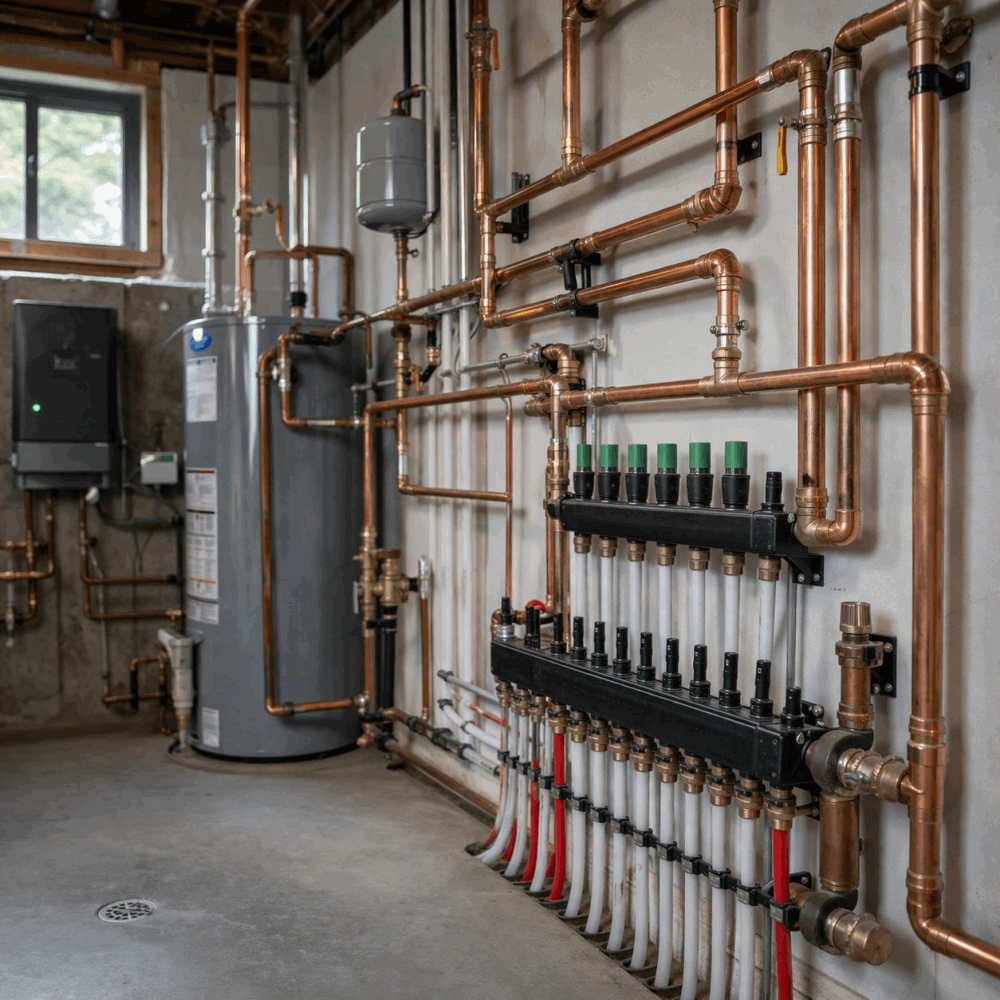
Mineral Exposure Extends Beyond The Pipe
Hard water affects more than internal pipe surfaces.
It also impacts:
- fixtures
- appliances
- water heaters
- valves
Common outcomes include:
- premature fixture failure
- sediment buildup in heaters
- valve restriction
- inconsistent water delivery
These visible symptoms often appear before major pipe failure.
But they are connected to system-wide mineral exposure.
Dry Soil Movement Transfers Stress Underground
Tucson soil conditions introduce movement cycles beneath homes.
Dry soil contracts.
When moisture returns, it expands.
This creates shifting pressure beneath slab foundations.
Which transfers stress into:
- underground water lines
- sewer systems
- slab penetrations
- connection points
Over time, this leads to:
- pipe misalignment
- joint separation
- cracking
- slab leak conditions
Even small movement can create long-term structural stress.
Slab Foundations Concentrate Risk
Many Tucson homes are built on slab foundations.
This places plumbing systems beneath the structure.
Which creates:
- limited visibility
- delayed detection
- difficult access for repair
- lateral spread of water damage
When failure occurs:
- water travels beneath the slab
- symptoms appear away from origin
- damage expands before detection
This increases both complexity and cost of repair.
Pressure Imbalance Develops Over Time
Mineral buildup and heat exposure create uneven system conditions.
Some areas restrict faster.
Others remain open.
This creates:
- pressure imbalance
- increased stress at weak points
- unpredictable system behavior
Over time, pressure concentrates where the system is weakest.
Which leads to failure.
Rapid Growth Adds Installation Variability
Tucson has experienced periods of expansion.
Which introduces variability in:
- installation quality
- material consistency
- system design
- inspection processes
This can result in:
- weak connection points
- poor support
- improper slope
- early-stage instability
Some systems begin with hidden weaknesses.
Environmental pressure exposes them over time.

Why Failures Often Appear Sudden
Most Tucson plumbing failures feel immediate.
But the system typically followed a progression:
- heat exposure
- mineral accumulation
- soil movement
- pressure imbalance
- material fatigue
- visible failure
The final event is sudden.
The buildup is not.
Repeated Repairs Do Not Stabilize The System
Many homeowners address visible issues one at a time.
But repairs do not remove:
- mineral buildup
- soil movement
- heat exposure
- pressure imbalance
Each repair reconnects new material to an aging system.
This creates mismatch stress.
Which leads to:
- new failures in adjacent areas
- expanding repair zones
- shorter repair lifespan
At a certain point, the system becomes unstable.
Human-System Acceleration Factors
Environmental pressure sets the baseline.
Human decisions influence how quickly systems degrade.
Common factors include:
- delaying maintenance
- ignoring early warning signs
- repeated spot repairs
- lack of water treatment
- improper material upgrades
- DIY modifications
In Tucson, pressure builds over time.
Delay allows it to compound.
Final Positioning Statement
Tucson plumbing systems fail where desert heat, mineral exposure, soil movement, and pressure imbalance overlap.
That pressure develops through:
- extreme temperature conditions
- internal scale buildup
- underground movement
- slab construction
- installation variability
- delayed detection
The visible problem is only the final stage.
The real system stress builds over time.
Understanding Tucson’s desert plumbing environment helps homeowners recognize risk earlier, reduce repeat failures, and make better long-term decisions about their home’s plumbing system.