
🌊 HOUSTON AREA
Houston • Katy • Sugar Land • The Woodlands • Pearland
Water Movement + Saturation + Hidden Damage
What this means for your home
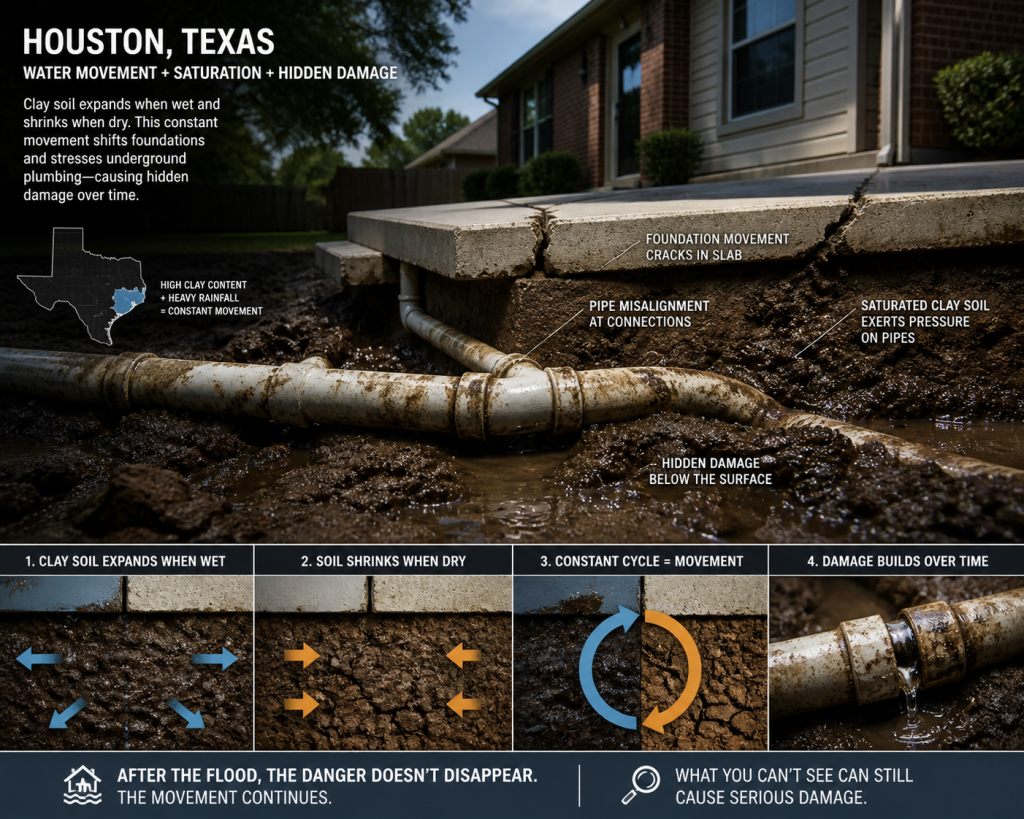
If you live in this region, your home is constantly interacting with water beneath the surface, not just during storms—but year-round.
The soil in this area is clay-heavy. Clay absorbs water, expands, then dries and contracts. That cycle doesn’t happen once—it happens continuously.
Your foundation sits directly in that cycle, and your plumbing system is locked inside that foundation.
Over time, your home isn’t “failing”—it’s slowly shifting.
What actually goes wrong
- Pipes don’t just crack—they shift, bend, and misalign
- Slab foundations experience micro-movement cycles (lift → settle → lift)
- Sewer lines develop bellies (low points) where waste collects
- Water lines experience tension at connection points
- Moisture presence masks leaks—problems blend into the environment
What most homeowners miss
After a flood, everything looks dry again—but underground, the soil has changed position.
That means your plumbing system may no longer be sitting where it was originally installed to be.
What to think about
You’re not just dealing with water—you’re dealing with movement caused by water.
A proper system here needs:
- flexibility
- routing that avoids stress zones
- tolerance for ongoing ground movement

🏗️ Builder Patterns (Houston)
What builders did well
- Large-scale planning in master communities
- Surface drainage systems to move visible water away
- Adoption of newer materials in more recent builds
Where things broke down
- Subsurface conditions were often underestimated
- Slab plumbing installed before soil fully stabilized
- Large developments used multiple crews → inconsistent execution
- Focus was on managing water above ground, not below

📈 Growth vs Quality Reality
Houston expanded rapidly. Demand for housing surged, and builders had to keep up.
That created a predictable chain reaction:
- More builds → more labor needed
- More labor → wider range of skill levels
- Wider skill levels → inconsistent system quality
👉 Two homes built at the same time can perform completely differently.
❄️ DALLAS / NORTH TEXAS
Dallas • Plano • Frisco • McKinney • Garland
Pressure + Time + Installation Issues
What this means for your home
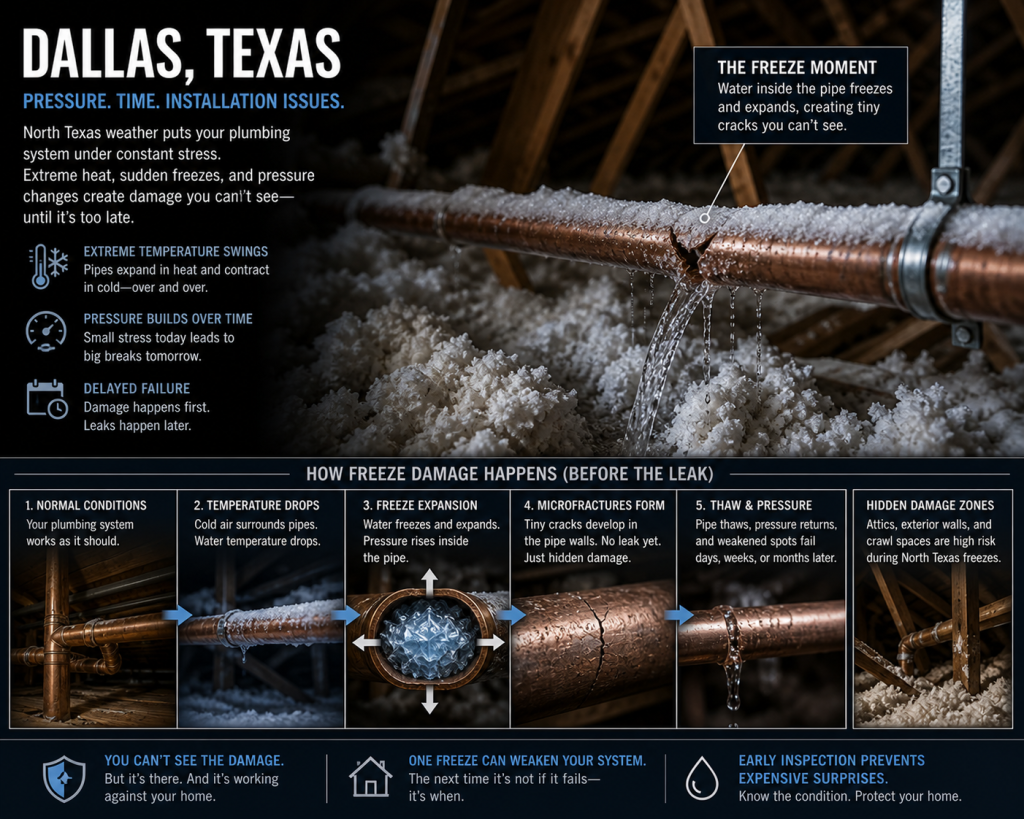
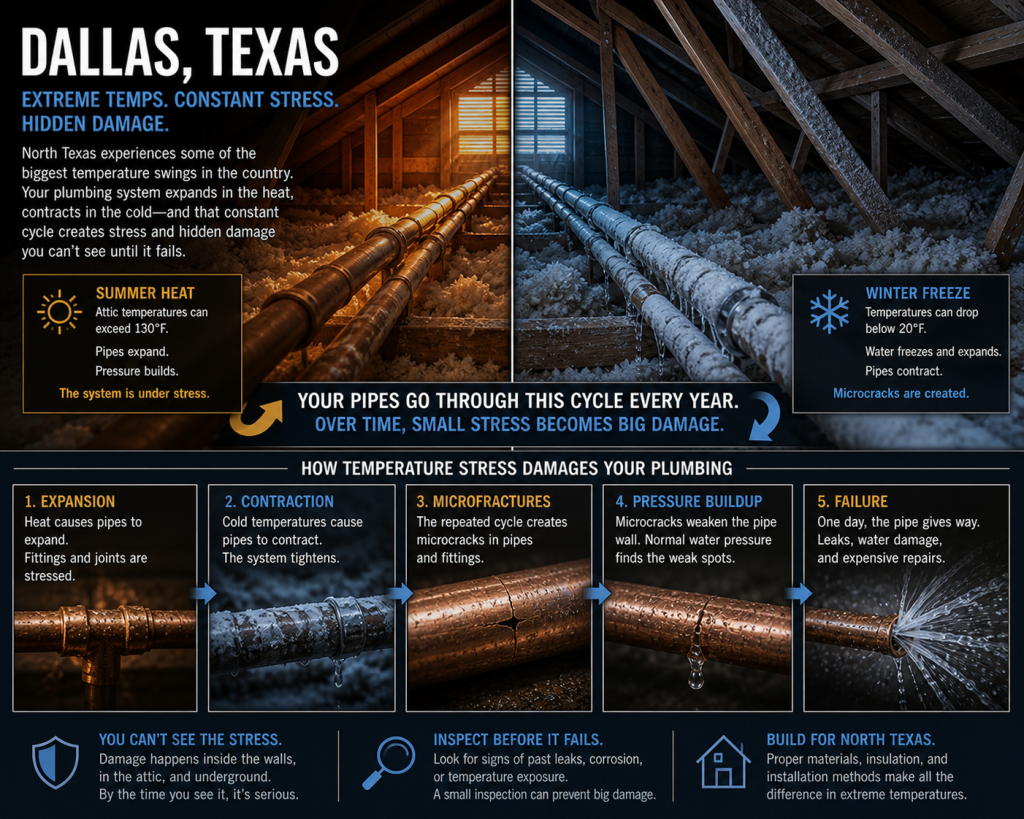
Your plumbing system is constantly expanding and contracting due to temperature swings.
Unlike regions with stable climates, North Texas systems are exposed to:
- extreme heat
- sudden freezes
- rapid pressure changes
These forces don’t just cause immediate failures—they create delayed failures.
What actually goes wrong
- Freezing causes water inside pipes to expand → creates microfractures
- Pipes thaw and continue working—but are structurally weakened
- Pressure builds over time → failure happens later
- Attic plumbing becomes a major risk zone
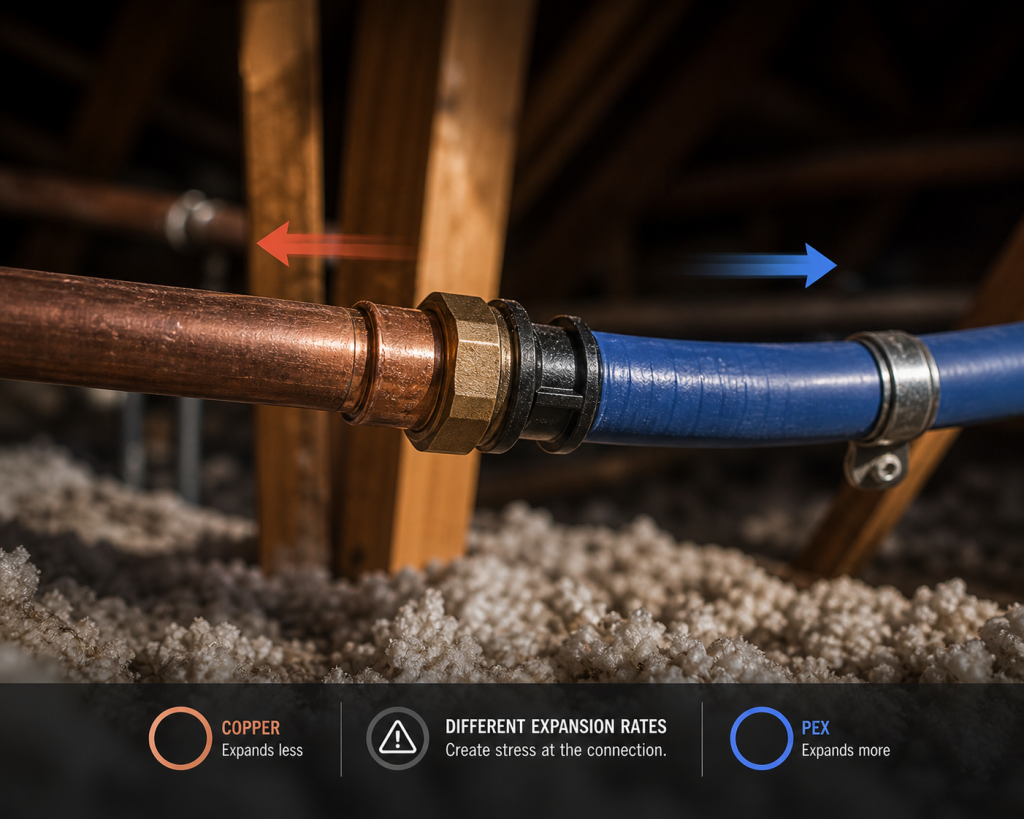
- Mixed materials (copper, PVC, PEX) expand at different rates → stress points
What most homeowners miss
The damage often happens before the visible failure.
By the time a pipe bursts, the system has already been compromised for months—or years.
What to think about
This isn’t just about weather—it’s about how the system responds to repeated stress cycles.
A proper system here needs:
- temperature-aware routing
- consistent materials
- pressure control
🏗️ Builder Patterns (Dallas)
What builders did well
- Efficient suburban expansion
- Repeatable home designs
- Systems built to operate under standard conditions
Where things broke down
- Attic plumbing exposed to extreme temperature variation
- Material transitions not engineered for long-term expansion differences
- Install speed prioritized over reinforcement and support
- Systems not designed for rare but severe freeze events
📈 Growth vs Quality Reality
During peak expansion:
- Builders scaled fast
- Labor spread thin
- Install quality varied
👉 Many systems were built to function immediately, not endure long-term stress.
🏙️ FORT WORTH AREA
Fort Worth • Arlington • Irving • Grand Prairie • Carrollton
Usage Load + Structural Stress + Hidden Damage
What this means for your home
Your plumbing system may be operating under more demand than it was designed for.
Homes today use more water:
- more fixtures
- more appliances
- more simultaneous demand
But the system underneath often hasn’t changed.

What actually goes wrong
- Constant demand creates pressure cycling stress
- Pipes expand and contract under repeated load
- Structural framing shifts transfer force into plumbing
- Leaks form in hidden areas where stress accumulates
- Multi-unit systems create shared stress across properties
What most homeowners miss
The system isn’t failing because of one event—it’s failing because of constant load over time.
What to think about
This is a capacity issue.
A proper system here needs:
- load balancing
- distribution planning
- capacity matching to actual usage

🏗️ Builder Patterns (Fort Worth)
What builders did well
- Durable construction in older neighborhoods
- Systems designed for original household demand
- Straightforward plumbing layouts
Where things broke down
- Demand increased but systems were never upgraded
- Additions and remodels added load without redesign
- Plumbing tied tightly to framing → stress transfer
- Older systems kept operating past intended lifespan

📈 Growth vs Quality Reality
- Population increased
- Household usage increased
- Infrastructure upgrades lagged
👉 Systems are often running beyond their original design limits.
🏔️ AUSTIN AREA
Austin • Round Rock • Cedar Park • Georgetown • Pflugerville
Pressure + Ground Conditions + Time
What this means for your home
Austin sits on mixed geological conditions.
Your home might be on:
- stable limestone in one section
- shifting clay in another
- varying elevation across the same property
That creates uneven stress across your plumbing system.

What actually goes wrong
- Different parts of the home move differently
- Pipes experience uneven tension across runs
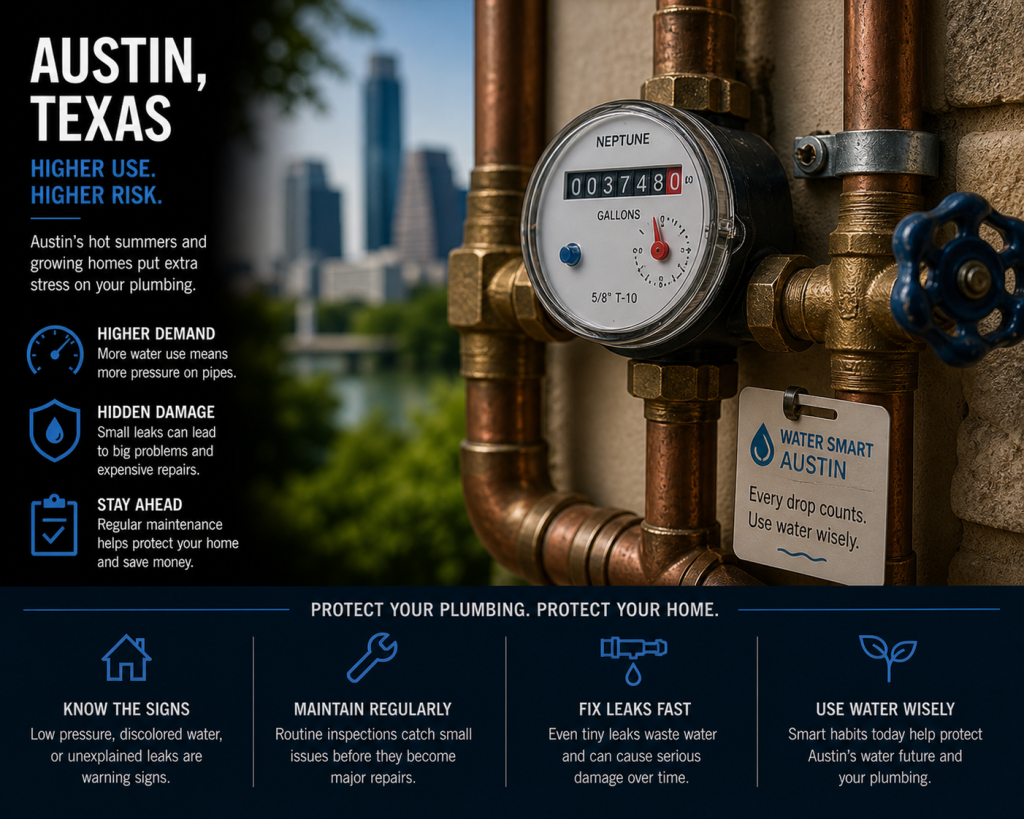
- Pressure varies between upper and lower areas
- Connection points become long-term failure zones
What most homeowners miss
The system doesn’t fail immediately—it accumulates stress over time.
What to think about
This is a long-term structural interaction problem, not a short-term repair issue.
A proper system here needs:
- pressure regulation
- flexible routing
- tolerance for uneven movement
🏗️ Builder Patterns (Austin)
What builders did well
- High-end materials and modern designs
- Strong focus on visual quality and layout
- Updated building methods in many developments
Where things broke down
- Ground variability not fully accounted for
- Pressure differences across elevation overlooked
- Rapid growth diluted skilled labor availability
- Focus on finish over long-term system performance

📈 Growth vs Quality Reality
- Massive population influx
- Rapid increase in home values
- High construction demand
👉 Quality became inconsistent as speed increased.
 SAN ANTONIO AREA
San Antonio • Bexar County • Mesquite • Pasadena (TX) • League City
Hidden Damage + Water Quality + Time
What this means for your home
The biggest threat to your plumbing system may be inside the pipes themselves.
Hard water contains minerals that build up slowly over time.
This changes how your system performs from the inside out.

What actually goes wrong
- Mineral buildup reduces pipe diameter
- Reduced diameter increases internal pressure
- Pressure accelerates wear and failure
- Corrosion forms internally
- Leaks develop slowly and remain hidden
What most homeowners miss
The system can look completely normal externally while degrading internally.
What to think about
This is not a sudden failure issue—it’s a gradual restriction and pressure problem.
A proper system here needs:
- awareness of internal condition
- full-system evaluation
- not just localized repairs

 Builder Patterns (San Antonio)
What builders did well
- Durable, long-lasting systems in older homes
- Simple, serviceable layouts
- Materials appropriate for original conditions
Where things broke down
- Long-term mineral exposure not accounted for
- Older materials degrade internally over time
- Repairs performed incrementally instead of system-wide
- Water quality impact largely ignored

 Growth vs Quality Reality
- Slower, steady population growth
- Older homes remain in service longer
- Fewer full-system replacements
 Systems age quietly until failure becomes unavoidable.