
Maine
Plumbing Systems Under Freeze and Coastal Moisture Pressure
Maine plumbing systems operate inside a high-stress environmental cycle where freeze-thaw movement, coastal moisture exposure, salt air corrosion, and aging infrastructure overlap continuously.
Winter temperatures regularly fall below freezing.
Then coastal warming patterns create repeated thaw cycles.
Snowmelt saturates the ground.
Salt air accelerates corrosion near the coast.
Moisture remains trapped around foundations, crawl spaces, and plumbing systems for extended periods.
In Maine, many plumbing failures begin quietly long before visible damage appears inside the home.
Freeze pressure builds inside vulnerable pipes.
The ground shifts during thaw cycles.
Moisture enters structural systems.
Corrosion weakens aging infrastructure.
Then one condition changes.
The system responds.
Across Maine, homeowners commonly experience:
- frozen pipes
- burst copper lines
- freeze-thaw sewer movement
- crawl space moisture intrusion
- coastal corrosion
- basement water infiltration
- drainage imbalance
- underground pipe shifting
- hidden winter leaks
- foundation-related plumbing stress
- recurring freeze exposure damage
- aging sewer deterioration
Most Maine plumbing failures are not isolated plumbing events.
They are environmental pressure failures tied to freeze cycling, coastal exposure, moisture saturation, and long-term infrastructure stress.

Freeze-Thaw Cycling Creates Repeated Infrastructure Stress
Maine’s climate creates constant freeze-thaw pressure.
Water freezes inside pipes.
Expansion pressure develops internally.
Then daytime warming begins.
The ground thaws.
Moisture enters the soil again.
Then temperatures drop once more.
This repeated cycling creates cumulative structural stress underneath homes and around buried plumbing systems.
Freeze-thaw cycling remains one of the largest contributors to foundation and infrastructure damage throughout coastal and southern Maine.
Unlike colder inland regions where the ground stays frozen consistently, coastal Maine experiences repeated shallow freeze-thaw movement throughout winter.
That repeated movement affects:
- foundations
- sewer laterals
- slab plumbing
- crawl space systems
- underground water services
As soils expand and contract:
- underground pipe alignment changes
- joints weaken
- drainage pitch shifts
- foundations absorb lateral pressure
- buried supports become unstable
Many Maine plumbing systems experience years of gradual environmental stress before visible failures finally appear.
Coastal Moisture and Salt Air Accelerate Corrosion
Maine’s coastal environments place additional stress on plumbing systems.
Salt air carries corrosive particles inland continuously.
Humidity remains elevated near the coastline.
Snow, rain, and ocean moisture repeatedly wet exposed materials.
Then freeze conditions return.
That cycle accelerates deterioration across:
- copper piping
- plumbing supports
- cast iron drain systems
- exterior utility components
- water heater systems
- metal fasteners and fittings
Coastal Maine homes experience constant exposure to salt air, freeze-thaw cycling, storm moisture, and corrosion conditions that accelerate material deterioration.
Over time:
- pipe walls weaken
- oxidation accelerates
- fittings corrode
- drain systems deteriorate
- structural moisture accumulates
The plumbing system gradually loses stability underneath the structure while the environmental exposure remains active year-round.

Frozen Pipes Become System-Wide Water Damage Events
Frozen pipes remain one of the most common plumbing failure patterns throughout Maine.
Especially inside:
- crawl spaces
- exterior walls
- basements
- attics
- seasonal homes
- coastal cottages
- under-insulated utility areas
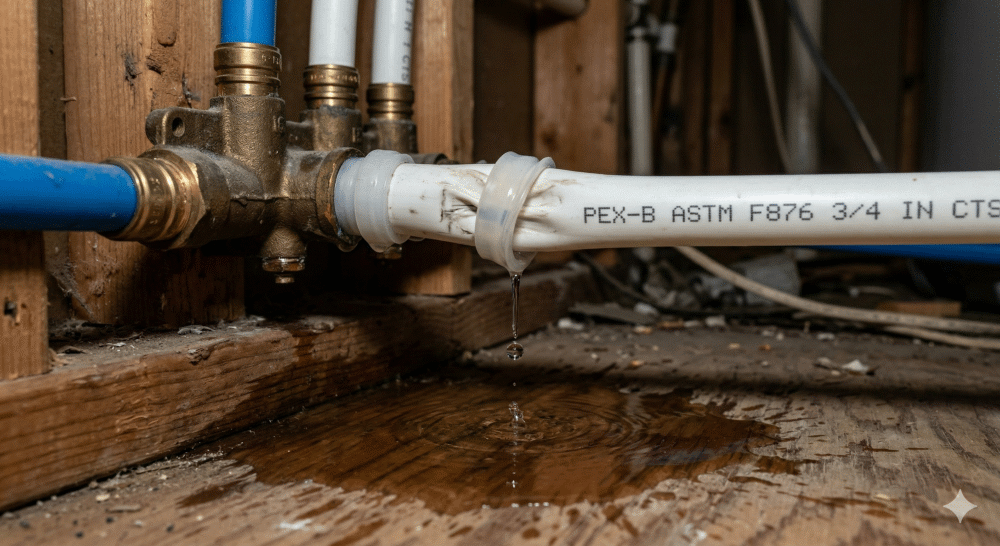
When water freezes inside the pipe, expansion pressure builds rapidly.
Even small cracks can release significant volumes of water once thawing begins.
Many homeowners do not discover the leak immediately.
Especially in:
- unoccupied winter properties
- seasonal homes
- remote coastal structures
- cabins
- poorly monitored buildings
The visible ceiling stain or flooring damage often appears much later than the original freeze event.
The environmental pressure begins long before the visible release.
Maine Crawl Spaces and Basements Become Moisture Transition Zones
Many Maine homes contain basements and crawl spaces vulnerable to both moisture exposure and freeze instability.
Snowmelt increases groundwater pressure.
Rain saturates the soil.
Cold air enters underneath structures.
Humidity remains trapped during seasonal transitions.
These environments become active deterioration zones.
This affects:
- plumbing systems
- insulation
- structural framing
- drainage systems
- indoor air quality
Many Maine homeowners experience:
- condensation buildup
- mold growth
- hidden pipe leaks
- basement moisture intrusion
- corrosion around plumbing supports
- recurring freeze exposure damage
The plumbing system becomes directly connected to the larger environmental moisture cycle surrounding the structure.
Seasonal and Coastal Homes Face Elevated Freeze Risk
Maine contains a large number of seasonal-use properties.
Cabins.
Lake homes.
Coastal cottages.
Remote winter properties.
These structures face elevated plumbing risk because systems often remain inactive during extreme winter conditions.
Unmonitored systems become vulnerable to:
- frozen pipes
- undetected leaks
- prolonged freeze exposure
- heat loss
- crawl space freezing
- sewer line freeze blockage
Maine winterization guidance continues emphasizing insulation, heat protection, and monitoring because freeze exposure can rapidly escalate into major structural water damage.
Many major plumbing failures occur after structures sit unattended during winter weather cycles.
Freeze-Thaw Soil Movement Shifts Underground Plumbing Systems
Freeze-thaw movement affects more than exposed pipes.
It also changes underground soil stability.
As the ground repeatedly freezes and thaws:
- buried sewer systems absorb lateral movement
- underground supports shift
- pipe joints separate
- drainage slope changes
- wastewater flow becomes inconsistent
Maine’s repeated shallow freeze-thaw cycling creates cumulative lateral pressure against foundations and buried infrastructure systems.
Many sewer backups and underground plumbing failures originate from years of environmental movement rather than one isolated event.
The visible backup is often the final stage of long-term underground instability.
Drainage and Venting Imbalance Across Maine Homes
Drainage systems rely on stable airflow and pressure balance.
Freeze exposure disrupts that balance.
Vent stacks freeze.
Drain lines cool rapidly.
Underground movement alters drainage pitch.
Moisture exposure accelerates deterioration inside older vent and drain systems.
Many Maine homeowners experience:
- gurgling drains
- slow winter drainage
- sewer odors
- intermittent backups
- fluctuating toilet performance
- recurring cold-weather plumbing instability
The visible issue often appears at one fixture.
The larger issue usually exists across the broader environmental plumbing system underneath the structure.
Maine Plumbing Failures Are Environmental Pressure Failures
Most Maine plumbing failures involve overlapping environmental forces.
Freeze-thaw cycling.
Coastal moisture.
Salt exposure.
Ground saturation.
Infrastructure aging.
Drainage instability.
Corrosion.
Time.
These forces gradually weaken plumbing systems underneath homes while remaining mostly hidden during early stages.
Then one condition changes.
Temperatures drop.
The soil shifts.
Pressure rises.
A weakened connection separates.
The system responds.
That is why Maine plumbing environments increasingly require full-system evaluation instead of isolated repair thinking.
The visible frozen pipe, sewer backup, or hidden leak is often only the final stage of a much larger freeze and coastal moisture pressure failure pattern.