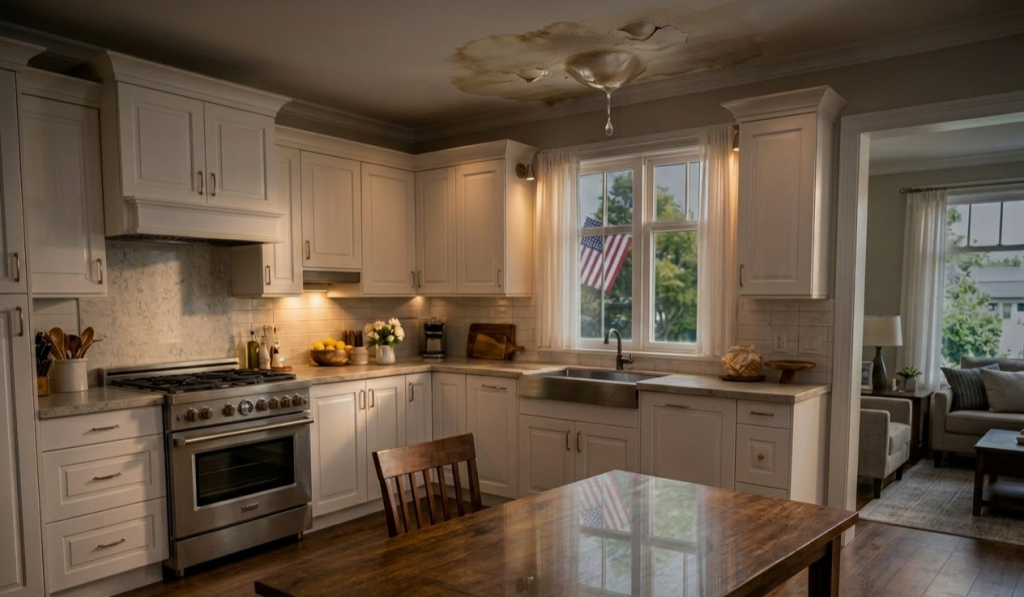
Georgia Plumbing Systems Under Humidity and Growth Pressure
This helps homeowners understand how humidity and rapid population growth across Georgia combine to stress plumbing systems, how hidden damage develops before visible failure, and when isolated repairs may signal larger system-wide deterioration.
Most plumbing failures in Georgia do not begin with a leak.
They begin with environmental exposure and system demand.
Moisture builds.
Pressure fluctuates.
Materials weaken.
The visible problem appears last.
Georgia operates inside a dual-pressure environment.
Humidity affects the system from the outside.
Growth affects the system from the inside.
Plumbing systems absorb both forces continuously.
Humidity Creates Persistent Internal Exposure
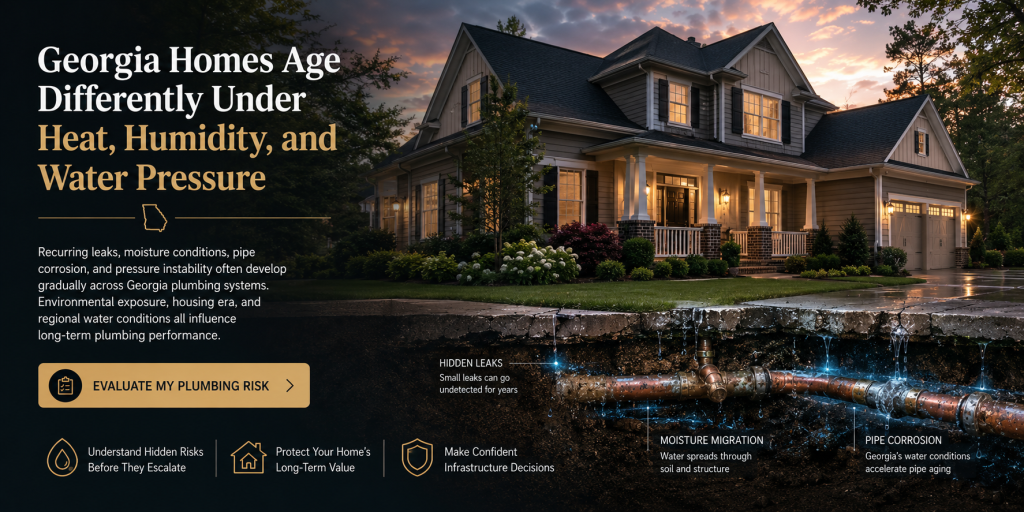
Georgia’s climate maintains elevated moisture levels for much of the year.
Air carries humidity into crawlspaces.
Wall cavities retain moisture with limited airflow.
Condensation forms on supply lines during temperature shifts.
That environment prevents full drying cycles.
Metal components remain exposed.
Protective surfaces degrade over time.
Fittings weaken gradually.
Support hardware corrodes.
Even small moisture presence becomes significant when it is constant.
Moisture Extends Beyond the Pipe Itself
Humidity does not remain isolated to plumbing materials.
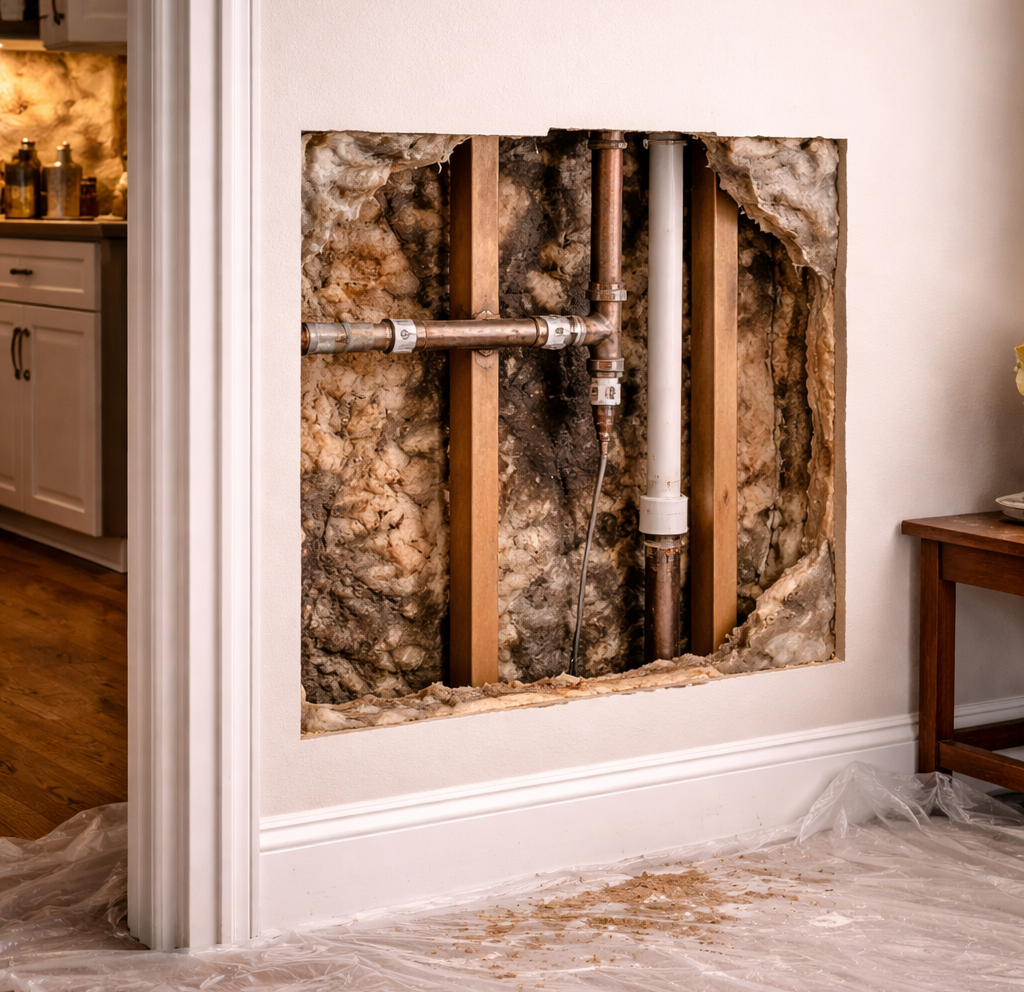
Moisture spreads into surrounding building components.
Insulation absorbs exposure.
Framing retains moisture.
Subfloor systems experience prolonged contact.
When a minor leak develops, the environment amplifies its impact.
Evaporation slows.
Water lingers.
Damage expands outward from the original source.
Visible symptoms often appear late.
Growth Increases Internal System Demand
Georgia continues to experience rapid population expansion.
New developments connect into existing municipal systems.
Demand increases across shared supply infrastructure.
Daily usage fluctuates more dramatically.
Peak periods introduce system strain.
Pressure balancing becomes less consistent.
That increased demand affects:
- Supply line stability
- Fixture performance
- Water heater operation
- Pressure regulation systems
- Appliance longevity
Homes experience these shifts regardless of age.
Mixed Infrastructure Creates Uneven Performance
Older and newer systems operate together across Georgia.
Legacy neighborhoods connect into expanded infrastructure networks.
New construction introduces additional load.
Pressure behavior varies between properties.
One home may experience elevated pressure.
Another may experience reduced flow.
Nearby systems may fluctuate throughout the day.
That inconsistency introduces long-term stress across plumbing components.
Pressure Fluctuation Accelerates System Fatigue
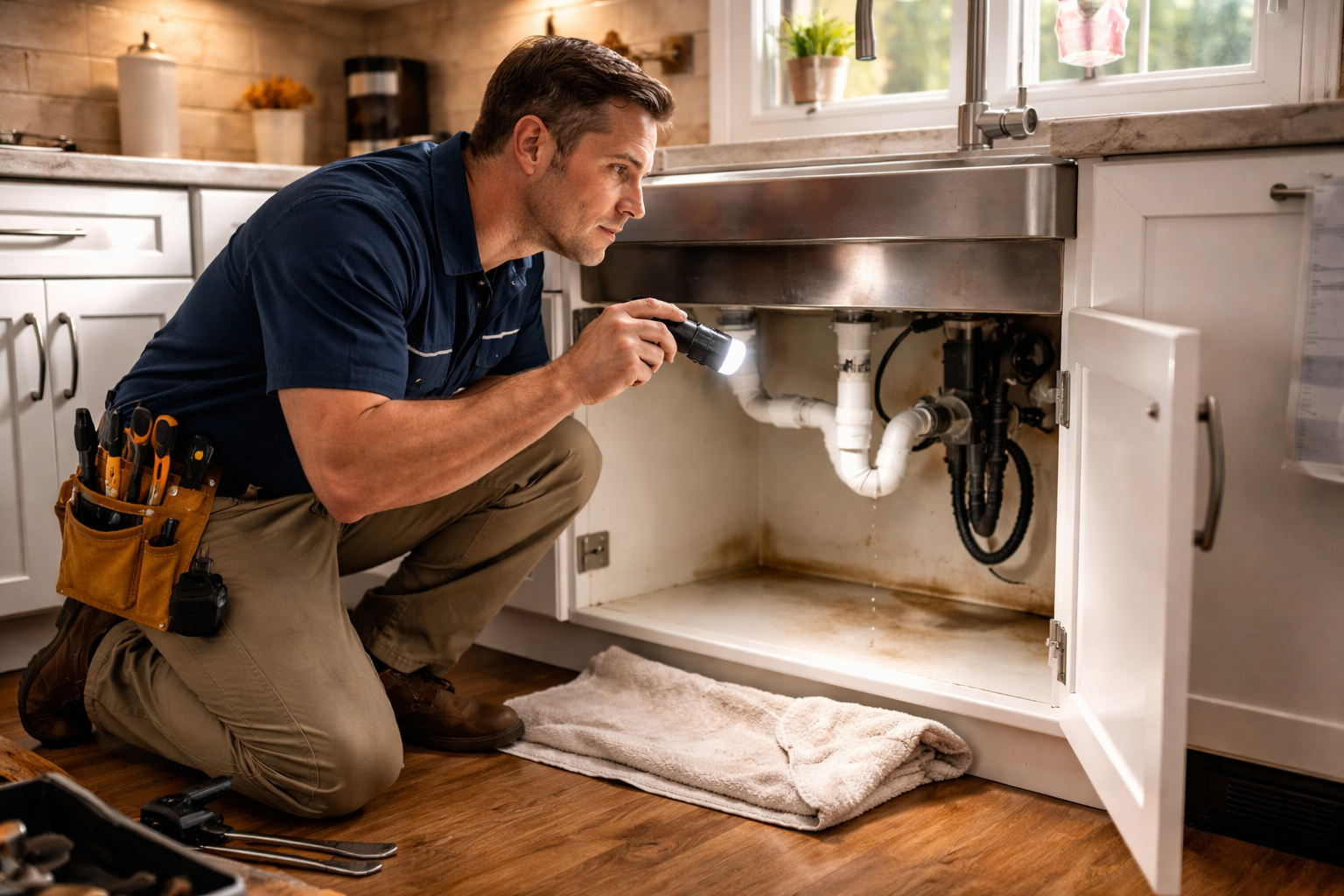
Growth-driven demand leads to pressure variability.
Even moderate fluctuation can create cumulative damage.
Internal pipe walls expand and contract repeatedly.
Connection points absorb constant stress.
Valves cycle under changing conditions.
Regulators work continuously to maintain balance.
Over time, this contributes to:
- Pipe fatigue
- Seal deterioration
- Hidden leak development
- Appliance wear
- System imbalance
The damage is gradual.
The failure appears sudden.
Aging Materials Weaken Under Combined Stress
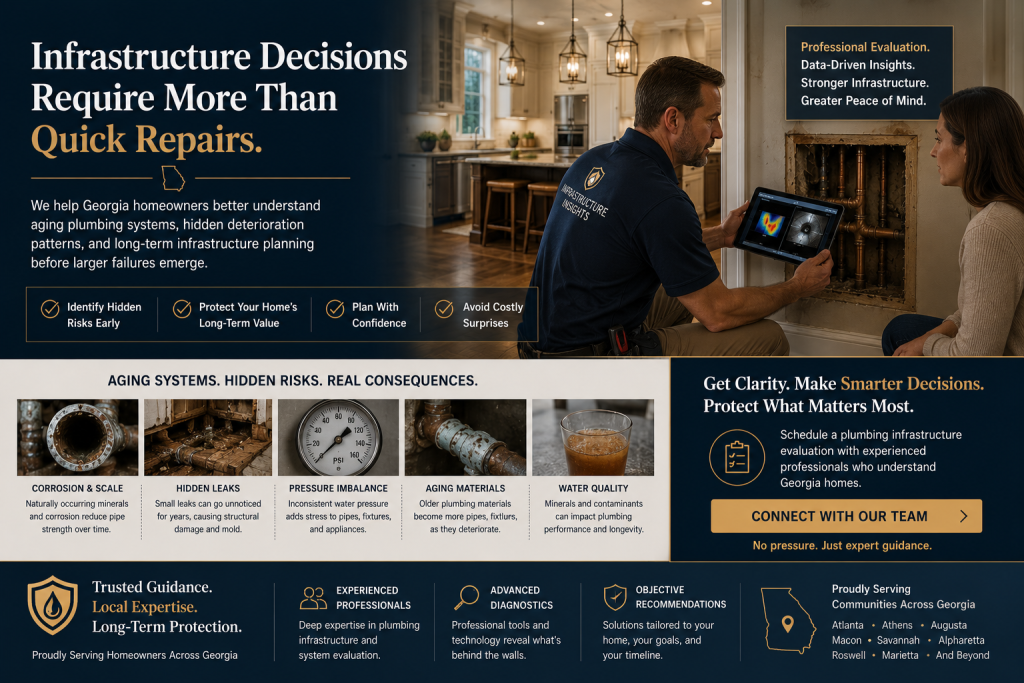
Many Georgia homes still rely on older plumbing systems.
Galvanized piping continues internal corrosion.
Copper systems develop fatigue from pressure cycling.
Older fittings degrade over time.
These materials were not designed for current environmental exposure or demand levels.
Humidity accelerates external degradation.
Pressure fluctuation increases internal stress.
The combination shortens system lifespan.
Soil Movement Adds Subsurface Pressure
Clay-heavy soils across Georgia expand and contract with moisture changes.
Wet periods increase soil volume.
Dry cycles reduce it.
That movement transfers force into underground plumbing systems.
Supply lines shift incrementally.
Sewer systems move out of alignment.
Connections weaken over time.
External movement combines with internal pressure variability.
The system experiences stress from both directions.
Storm Cycles Increase Environmental Exposure
Heavy rainfall events increase moisture levels across the environment.
Soil becomes saturated.
Groundwater rises temporarily.
Drainage systems experience overload conditions.
External pressure on buried plumbing increases.
Humidity inside structures also rises.
Each storm cycle adds incremental stress.
Many failures surface shortly after these events.
The underlying deterioration has typically been progressing for years.
Rapid Construction Introduces System Variability
Georgia’s expansion includes high-speed construction across many regions.
Installation quality can vary between developments.
Small inconsistencies may remain stable initially.
Environmental and demand stress expose those weaknesses over time.
Potential issues include:
- Inconsistent pipe support
- Improper system balancing
- Weak connection points
- Drainage slope irregularities
- Undersized supply systems
These conditions do not always fail immediately.
They evolve under pressure.
Georgia Homes Operate Under Continuous Dual Pressure
Plumbing systems across Georgia experience overlapping forces.
Humidity maintains external exposure.
Growth increases internal demand.
Pressure fluctuation accelerates material fatigue.
Soil movement affects underground stability.
Storm cycles increase moisture and system strain.
Aging materials weaken over time.
Each factor compounds the others.
Most plumbing failures are not isolated incidents.
They are cumulative responses to continuous environmental and demand pressure.
Understanding these patterns allows homeowners to recognize early warning signs, evaluate system-wide health, and take action before hidden plumbing damage develops into larger structural and financial consequences.