
Plumbing System Warning Signs
Many homeowners assume plumbing systems fail suddenly. In reality, most plumbing infrastructure provides warning signs long before major leaks, slab failures, or water damage events occur.
Common Indicators of Plumbing Deterioration
✓ Recurring pipe leaks
✓ Declining water pressure
✓ Rust-colored water
✓ Water discoloration after periods of inactivity
✓ Multiple plumbing repairs within a few years
✓ Unexplained increases in water bills
✓ Moisture around foundations
✓ Slab leak history
✓ Aging galvanized steel systems
✓ Aging copper distribution lines
When these conditions begin appearing together, they often indicate broader system deterioration rather than a single isolated plumbing problem.

Housing Era Plumbing Intelligence
The age of a home often provides valuable clues regarding the condition and design of the plumbing system hidden behind walls, beneath floors, and throughout the structure.
Common Plumbing Materials By Construction Era
Homes Built Before 1950
These properties frequently contain:
- Galvanized steel supply lines
- Cast iron drainage systems
- Mixed-material plumbing repairs
- Multiple generations of plumbing modifications
Homes Built Between 1950 And 1975
Common characteristics include:
- Aging copper plumbing systems
- Original branch water distribution lines
- Early slab foundation plumbing
- Increasing leak frequency due to age
Homes Built Between 1975 And 1995
Many contain:
- Polybutylene plumbing systems
- Aging copper supply networks
- Original water service lines
- Early plastic plumbing materials
Homes Built After 2000
Often feature:
- PEX plumbing systems
- Modern water distribution layouts
- Improved fixture supply design
- Updated plumbing installation standards
Understanding the construction era of a property helps determine potential risks, expected service life, and future replacement considerations.
Plumbing Infrastructure Intelligence
A residential plumbing system functions much like a transportation network.
Water enters through the main service line, travels through a network of supply pathways, reaches fixtures throughout the property, and exits through drainage systems.
As plumbing materials age, stress frequently develops in multiple areas simultaneously.
Areas We Evaluate
- Pipe material type
- Water pressure performance
- Historical leak activity
- Water quality concerns
- Fixture demand
- Drainage systems
- Environmental conditions
- Water service line condition
- Plumbing age and lifecycle stage
Our goal is not simply identifying today’s leak.
Our goal is understanding the overall health of the plumbing infrastructure serving the property.
Understanding Why Pipes Fail
Most plumbing failures develop gradually.
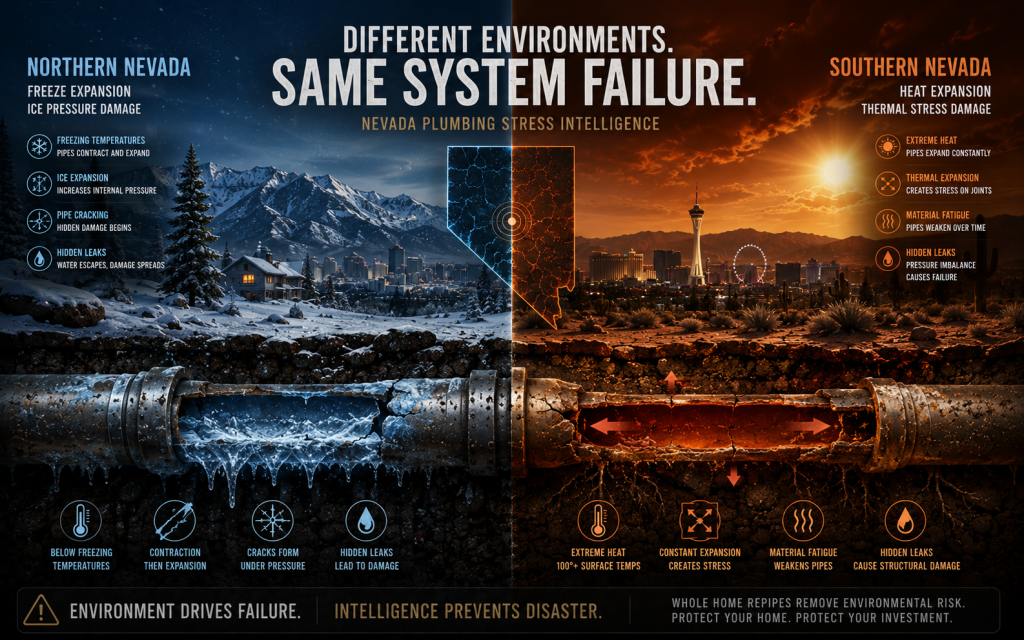
Years of environmental stress, water chemistry exposure, pressure fluctuations, and material fatigue often occur before homeowners notice visible symptoms.
Common Causes Of Pipe Failure
- Corrosion
- Mineral buildup
- Water chemistry conditions
- Freeze-thaw cycling
- Foundation movement
- Soil expansion and contraction
- Excessive water pressure
- Aging materials
- Installation defects
- Long-term material fatigue
Understanding the cause of failure helps homeowners avoid repeating the same repair cycle year after year.
Common Plumbing Materials
Material | Typical Lifespan | Common Concerns |
Galvanized Steel | 40-80 Years | Corrosion, pressure loss |
Copper | 30-70 Years | Pinhole leaks, aging systems |
Polybutylene | 20-40 Years | Material failure concerns |
Cast Iron | 40-100 Years | Corrosion and drainage deterioration |
PEX | Modern Systems | Current replacement standard |
Each material ages differently, responds differently to environmental conditions, and presents unique replacement considerations.
Plumbing Challenges Across America
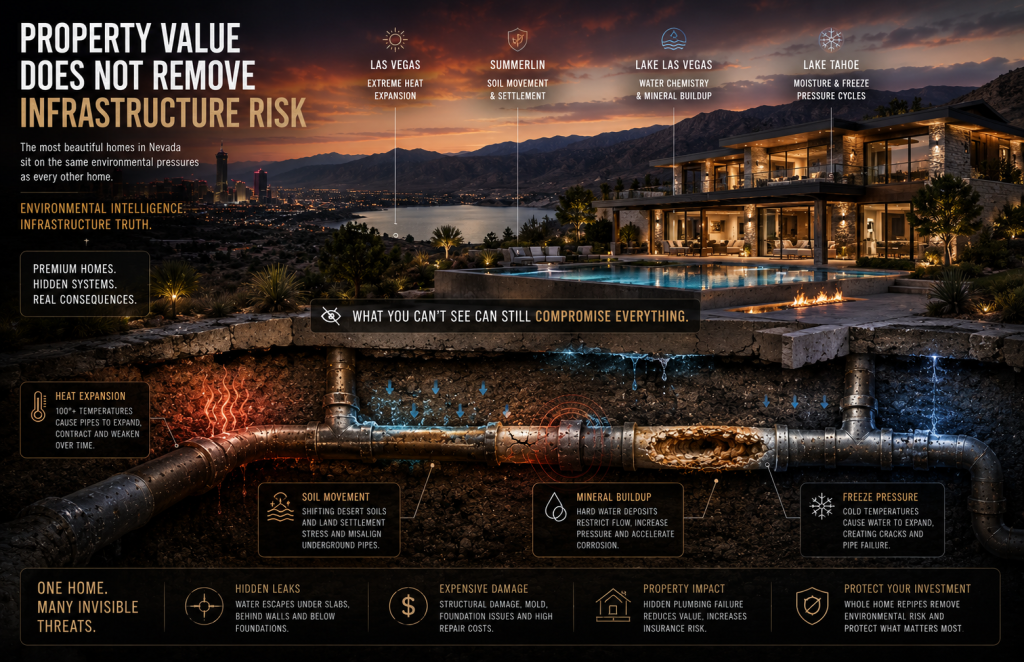
Environmental conditions influence plumbing systems throughout the country.
Different climates create different failure patterns.
Southwest Conditions
States including Nevada, Arizona, and New Mexico frequently experience:
- Hard water scaling
- Mineral accumulation
- Elevated summer temperatures
- Water efficiency upgrades
Texas Conditions
Common concerns include:
- Slab leaks
- Expansive clay soils
- Foundation movement
- Long underground water line runs
Mountain Region Conditions
Colorado, Utah, Wyoming, and Montana often experience:
- Freeze-thaw cycling
- Pipe expansion stress
- Snowmelt influences
- Seasonal pressure fluctuations
Midwest Conditions
Frequently observed issues include:
- Frozen pipe events
- Aging galvanized systems
- Older housing stock
- Water service line deterioration
Northeast Conditions
Common challenges include:
- Cast iron aging
- Freeze damage
- Multi-generational plumbing systems
- Older residential infrastructure
Homes Most Likely To Need Repiping
Certain property types consistently experience higher rates of plumbing infrastructure deterioration.
Common Examples
- Homes built before 1960
- Homes with galvanized plumbing
- Homes with polybutylene piping
- Properties with recurring slab leaks
- Older copper plumbing systems
- Rental properties with deferred maintenance
- Homes undergoing major remodeling
- Properties with extensive leak histories
These homes frequently benefit from a comprehensive plumbing evaluation rather than repeated isolated repairs.
Repair Or Replace?
One of the most common homeowner questions involves determining whether a repair or a complete repipe provides the better long-term solution.
Repairs Often Make Sense When
- The plumbing system is relatively modern
- A leak is isolated
- Pipe materials remain in good condition
- No recurring failures exist
Replacement Often Becomes Worth Considering When
- Multiple leaks have occurred
- Water pressure continues declining
- Pipe materials are approaching end-of-life
- Water quality concerns persist
- Repair costs continue increasing
- Slab leaks repeatedly occur
The objective is not simply stopping a leak.
The objective is determining whether the leak represents a symptom of broader plumbing system deterioration.
Our Repipe Evaluation Process
Every property presents unique conditions.
Our evaluation process focuses on understanding both immediate concerns and long-term infrastructure risks.
Step 1 — Plumbing Assessment
Review pipe materials, age, repair history, and existing plumbing conditions.
Step 2 — Infrastructure Analysis
Identify potential failure patterns, environmental influences, and future risk factors.
Step 3 — Solution Development
Develop recommendations tailored to the property’s layout, plumbing system, and homeowner goals.
Step 4 — System Modernization
Replace aging plumbing infrastructure with modern materials designed for long-term reliability.
Plumbing Lifecycle Management
Most homeowners routinely budget for:
- Roof replacement
- HVAC replacement
- Flooring upgrades
- Appliance upgrades
However, few evaluate the long-term condition of the plumbing infrastructure hidden behind walls and beneath foundations.
A plumbing system should be viewed as a major structural asset of the property.
Long-Term Planning Considerations
- Pipe material
- System age
- Leak history
- Water quality
- Renovation goals
- Property value
- Future ownership plans
Proactive planning often reduces future repair costs while improving long-term system reliability.
Comprehensive Repipe & Plumbing Infrastructure Services
Water Supply Systems
- Whole house repipes
- Whole home repipes
- PEX repiping
- Copper repiping
- Water line replacement
- Pipe reroutes
Aging Pipe Systems
- Galvanized pipe replacement
- Polybutylene replacement
- Aging copper replacement
- Corrosion mitigation
- Infrastructure upgrades
Leak & Failure Analysis
- Leak detection
- Slab leak evaluations
- Pressure diagnostics
- Pipe failure investigations
- Plumbing system assessments
Property Improvement Projects
- Renovation repipes
- Home modernization projects
- Plumbing upgrades
- Water efficiency improvements
- Long-term infrastructure planning