
Las Vegas vs Los Angeles — Slab Leak Expansion vs Earthquake Plumbing Stress
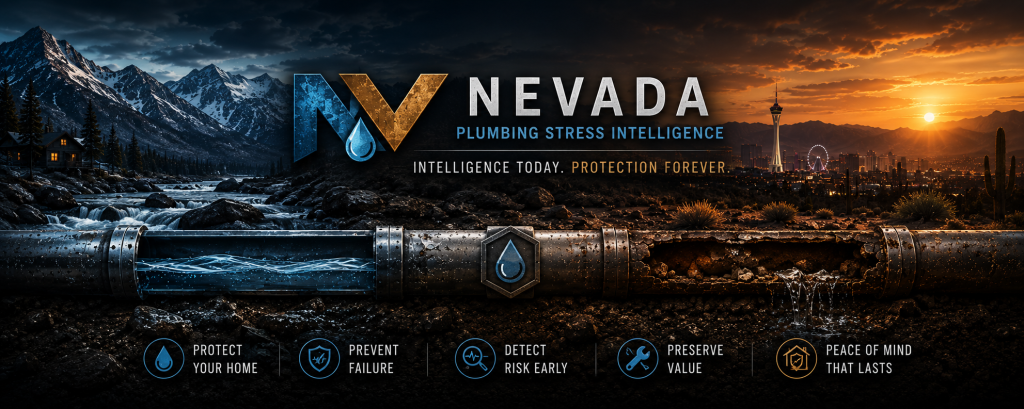
Desert Foundation Pressure Meets Seismic Infrastructure Movement
Las Vegas and Los Angeles operate under two completely different structural stress environments.
Across the Las Vegas Valley, extreme heat, hard water minerals, and shifting slab conditions slowly destabilize underground plumbing systems.
Throughout Los Angeles, seismic movement, hillside instability, and aging utility infrastructure place continual stress on plumbing pathways across dense urban development.
One region develops hidden slab leaks beneath expanding desert foundations.
The other absorbs repeated structural movement from seismic pressure and ground instability.
Water damage develops differently across each environment.
Infrastructure deterioration follows separate structural patterns.
First Quarter — Environmental Pressure
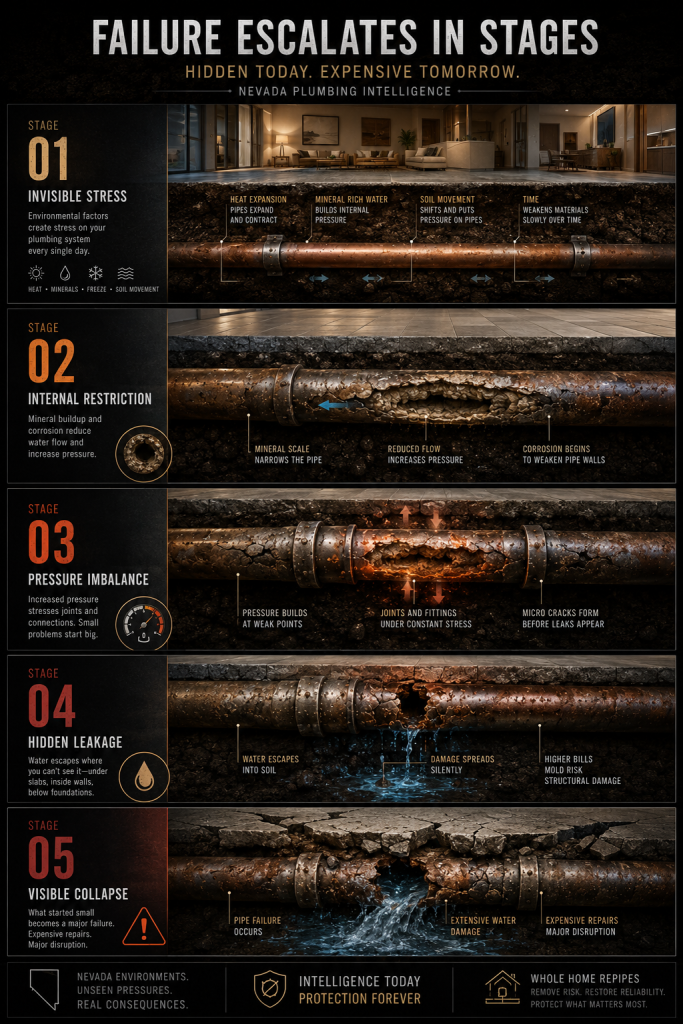
Long thermal cycles shape much of the Las Vegas infrastructure environment.
Extended desert heat dries the ground beneath slab-on-grade neighborhoods throughout:
- Summerlin
- Henderson
- Enterprise
- Spring Valley
- North Las Vegas
Meanwhile, mineral-heavy water gradually deposits scale buildup inside aging plumbing systems.
Pressure slowly increases across:
- Copper supply lines
- Underground plumbing pathways
- Pressure regulators
- Water heater systems
- Slab penetrations
Farther west, Los Angeles operates inside one of the country’s most complex seismic infrastructure environments.
Ground movement pressure develops through:
- Fault-line activity
- Hillside settlement
- Soil shifting
- Structural vibration
- Aging underground utilities
- Urban expansion stress
Dense residential development across the San Fernando Valley, Hollywood Hills, and hillside communities continually absorbs movement-related infrastructure strain.
Desert expansion pressure defines Las Vegas.
Seismic movement pressure defines Los Angeles.
Second Quarter — Plumbing Stress
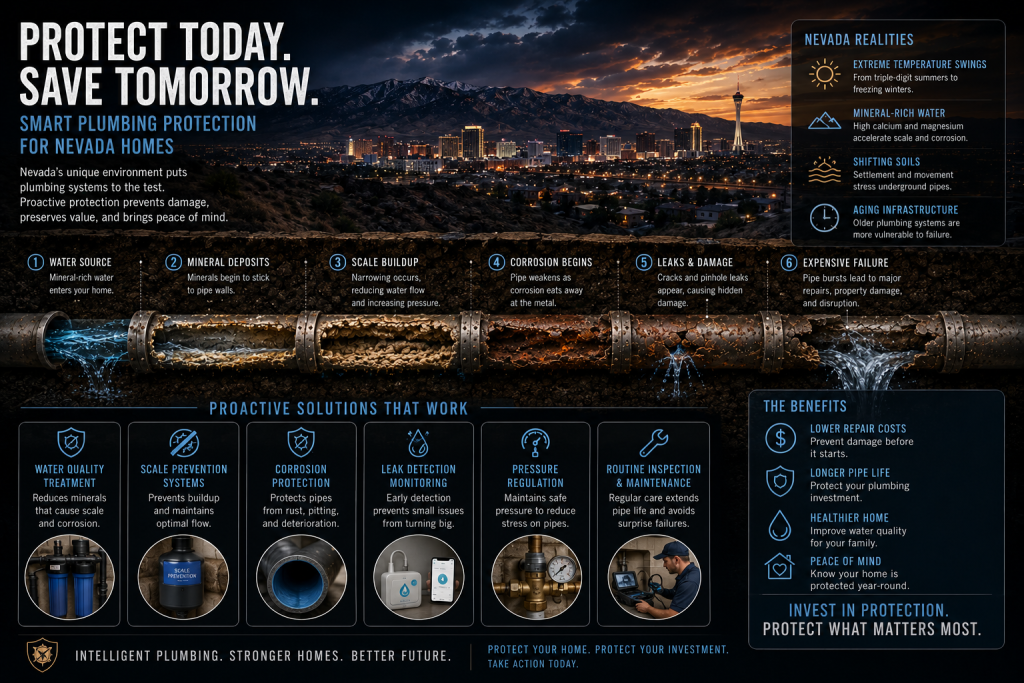
Inside many Las Vegas homes, slab leaks begin quietly beneath the structure.
Hard water buildup and thermal expansion gradually weaken:
- Copper supply lines
- Underground piping
- Slab-supported plumbing
- Pressure-control systems
- Water distribution pathways
Small leaks often remain hidden beneath flooring systems for extended periods before visible symptoms appear.
Luxury developments throughout Southern Highlands and Red Rock Country Club frequently place additional demand on plumbing infrastructure through larger layouts, irrigation systems, and elevated water consumption.
Across Los Angeles, plumbing stress develops through structural movement instead.
Seismic instability commonly affects:
- Pipe joints
- Sewer connections
- Foundation penetrations
- Hillside plumbing systems
- Underground utility corridors
- Older residential infrastructure
Apartment complexes, multifamily housing corridors, and aging hillside homes throughout Los Angeles frequently absorb repeated stress from ground movement and settlement exposure.
Desert slab pressure shapes Las Vegas failures.
Earthquake movement shapes Los Angeles plumbing stress.
Third Quarter — Structural Escalation
Las Vegas water damage often escalates slowly beneath the slab.
Underground seepage may continue spreading beneath tile flooring and foundation systems for months before visible damage appears indoors.
Long-term pressure commonly contributes to:
- Flooring distortion
- Cabinet damage
- Mold growth
- Hydrostatic pressure buildup
- Foundation moisture accumulation
Inside Los Angeles structures, escalation develops through repeated movement-related instability.
Small structural shifts gradually weaken plumbing pathways throughout:
- Hillside properties
- Apartment buildings
- Retail corridors
- Medical office campuses
- Older residential neighborhoods
Moisture intrusion commonly spreads into:
- Wall cavities
- Structural framing
- Foundation zones
- Lower flooring assemblies
- Utility interfaces
Ground movement may continue stressing infrastructure long after visible water damage is repaired.
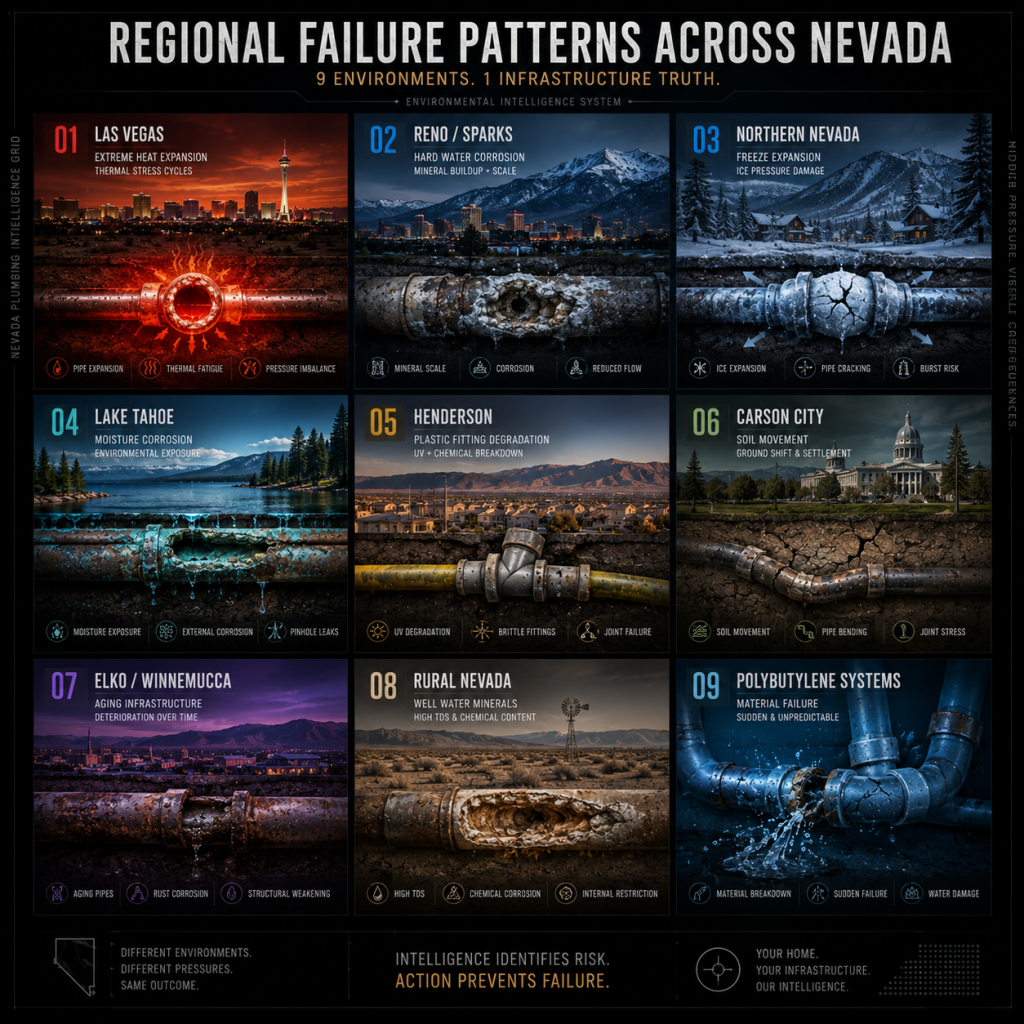
Las Vegas escalates through hidden underground leakage.
Los Angeles escalates through seismic plumbing displacement and structural shifting.
Fourth Quarter — Water Damage Outcome
Expansion-driven slab leaks create one form of restoration complexity.
Earthquake-related plumbing stress creates another.
Las Vegas recovery often focuses on:
- Slab leak detection
- Underground moisture mapping
- Hard water corrosion
- Foundation seepage analysis
- Pressure-regulation instability
Los Angeles restoration frequently requires evaluation for:
- Structural movement exposure
- Plumbing displacement
- Seismic utility instability
- Foundation penetration stress
- Hidden moisture migration
Hillside luxury homes overlooking the Pacific face different infrastructure pressure than slab-on-grade neighborhoods throughout the Las Vegas Valley.
Environmental behavior changes how plumbing systems fail and how moisture spreads through the structure.
Why This Matchup Matters
Water damage follows structural pressure.
Regional infrastructure conditions determine:
- How plumbing systems fail
- Which materials weaken first
- Where hidden moisture spreads
- Why structural exposure changes by region
- How restoration complexity evolves over time
Las Vegas infrastructure absorbs pressure through desert heat, hard water minerals, and slab expansion conditions.
Los Angeles infrastructure absorbs pressure through seismic movement, structural shifting, and urban utility stress.
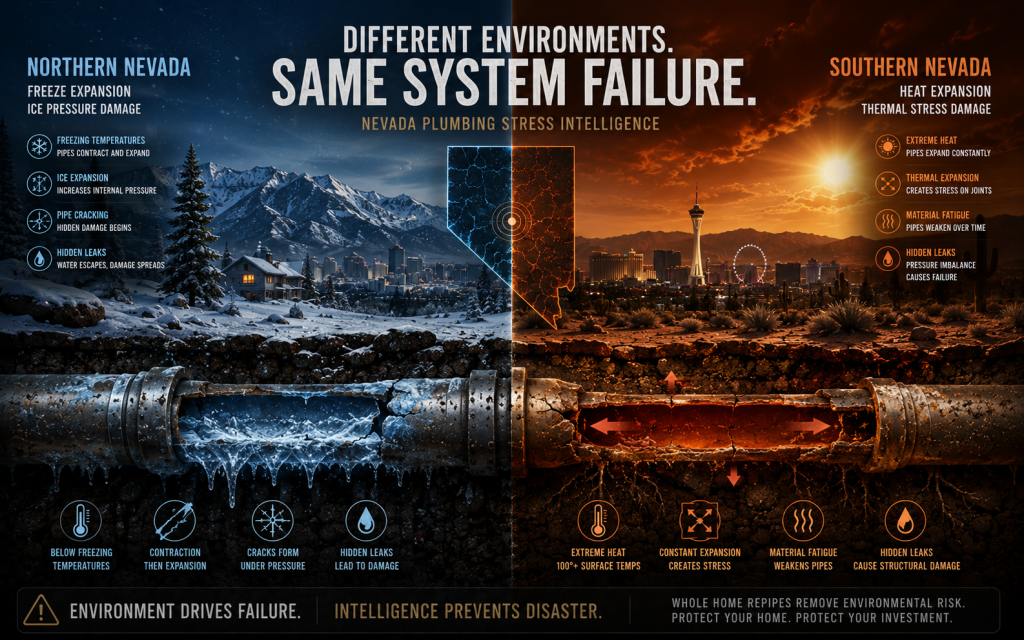
Desert slab leaks face earthquake plumbing pressure.
Each region creates a completely different infrastructure failure environment.