


🚨 Richmond Drainage & Flood Control System — Full Breakdown Report
Richmond & West County Lowlands, Contra Costa County (Recurring Events — most severe during 1982, 1998, 2017, 2023 storms)
Why This Matters to Homeowners in Contra Costa County:
In low-elevation areas, water doesn’t need a failure to enter your neighborhood—it just needs somewhere lower to go.
- Walnut Creek Flood (1955): System Overload Event
- El Niño Flooding (1998): Countywide Drainage Failure
- Lafayette Hillside Failures (Recurring): Soil Instability
- Orinda Creek Flooding (Recurring): Drainage Bottlenecks
- Richmond Flooding (Recurring): Low Elevation System Risk
- Contra Costa Canal Stress: Distribution System Vulnerability
- Mount Diablo Runoff (Recurring): Gravity Overload Event
- Martinez Drainage Failures (Recurring): Industrial System Overload
- Groundwater Subsidence (Recurring): Soil System Collapse
- Water Main Failures (Recurring): Aging System Breakdown
📍 Geographic + Structural Context (Pre-Event Environment)
This is a recurring low-elevation flood risk pattern centered in Richmond and surrounding Bay-adjacent communities.
Primary regions and cities affected (for scale + search relevance):
- Core impact zone: Richmond
- Adjacent communities: San Pablo, El Cerrito
- Nearby lowland zones: Hercules, Pinole
- Regional context: El Sobrante, Martinez
Critical preconditions:
- Low elevation terrain: Portions of Richmond sit near or at sea level
- Historic bay fill: Some areas built on reclaimed or altered land
- Flat topography: Limited natural drainage gradient
- Drainage dependency: Heavy reliance on storm drains and pump systems
- Tidal influence: Bay water levels can restrict outflow
🌊 Environmental + System Conditions
These failures occur during storm events combined with tidal conditions, including:
- 1982 California Storms
- 1998 El Niño Flooding
- 2017 California Storms
- California Atmospheric River Storms 2023
Typical conditions:
- Heavy rainfall generating runoff
- Saturated ground limiting absorption
- Elevated Bay or tidal levels
👉 Key dynamic:
Water cannot drain out fast enough because the destination is at the same or higher level

⚙️ Failure Mechanics (What Actually Breaks)
Step-by-Step Breakdown
- Runoff Generation (System Loading)
- Rainfall produces surface runoff
- Limited infiltration due to saturation
- Drainage System Intake
- Water enters storm drains and channels
- Systems begin to fill
- Outflow Restriction (Critical Factor)
- Bay water levels reduce discharge efficiency
- Gravity-driven drainage slows or stops
- System Backpressure Build-Up
- Water accumulates in pipes and channels
- Pressure increases within system
- Overflow + Surface Flooding
- Water exits:
- storm drains
- streets
- Spreads into neighborhoods
- Persistent Flooding Conditions
- Water remains due to poor drainage gradient
- Flooding lasts longer than typical events
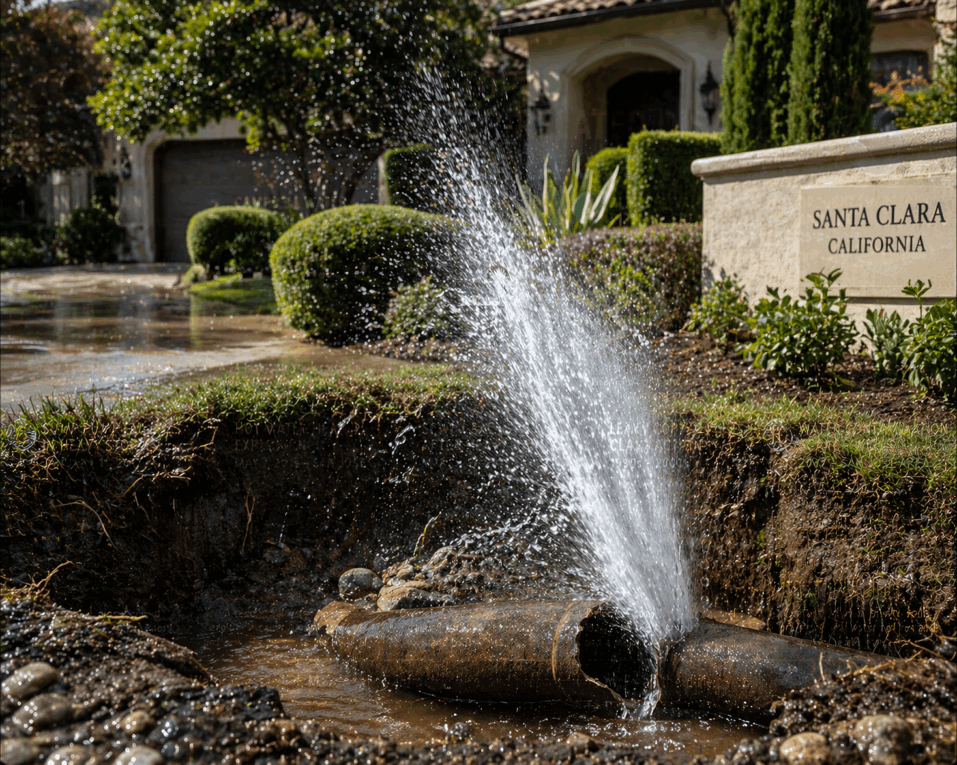
💥 The Event (Recurring Pattern)
- Timeline: Gradual accumulation → prolonged flooding
- Initial warning signs:
- slow drainage
- standing water
Collapse Dynamics
- System transitions from:
- draining → slowing → backing up → flooding
👉 Failure is driven by elevation and drainage limits—not just volume
🏚️ Immediate Damage Profile
- Flooding across low-lying Richmond neighborhoods
Damage characteristics:
- Water intrusion into homes
- Street and property flooding
- Prolonged standing water
🧠 System-Level Failure Analysis
1. Elevation Constraint
- Water cannot flow uphill
2. Outflow Dependency
- System relies on external conditions (tides)
3. Flat Terrain Limitation
- Minimal slope reduces drainage efficiency
🔁 Direct Aftermath (Short-Term)
- Pumping and water removal
- Cleanup and damage repair
- Temporary system relief
🧱 Indirect Effects (Long-Term Changes)
🏗️ 1. Pumping Infrastructure Improvements
- Increased reliance on mechanical drainage
🌊 2. Flood Control Systems
- Levees and barriers in vulnerable areas
📡 3. Monitoring + Forecasting
- Tracking tides and storm impacts
🏘️ 4. Land Use Awareness
- Recognition of low-elevation risks

🧩 Hidden Insights (What Most People Miss)
⚠️ 1. “Water Needs Somewhere Lower to Go”
Without it, flooding is inevitable
⚠️ 2. The Bay Controls the System
Outflow depends on water levels
⚠️ 3. Flooding Lasts Longer in Flat Areas
Drainage is slower
🧠 Contractor / System Thinking Translation
Infrastructure System | Residential Equivalent |
Drainage system | Home drain system |
Outflow restriction | Blocked main line |
Backpressure | Pipe pressure |
Flooding | Backup into home |
👉 Same equation:
Limited outflow + incoming volume = system backup and flooding
🏠 What This Means for Your Home
- Low elevation increases flood risk
- Drain systems depend on external conditions
- Standing water can persist longer
- Backups often originate outside your property
🎯 Final Takeaways (Mechanical Framing)
- Root Cause: Low elevation and limited drainage gradient
- Trigger: Storm runoff + tidal constraints
- Failure Type: Backpressure → overflow → flooding
- Impact Multiplier: flat terrain + outflow dependency
Lesson:
In low areas, water doesn’t need to break the system—it just needs nowhere to go