

🚨 San Jose Artesian Well Flood — Full Breakdown Report
📍 Geographic + Structural Context (Pre-Event Environment)
The incident occurred in early San Jose, along what was then developing infrastructure near present-day downtown corridors (reported around Fourth Street).
Critical preconditions:
- Water source: Pressurized underground aquifer common in the Santa Clara Valley at the time
- Well type: Artesian well—naturally pressurized groundwater capable of rising to the surface without pumping
- Control limitation: No modern:
- Valves
- Pressure regulators
- Flow control systems
- Urban setting: Early streets and structures not designed to handle continuous water discharge
- Knowledge gap: Limited understanding of subsurface pressure systems
🌎 Environmental + System Conditions
This was a pressure-driven underground system failure.
- No weather trigger
- No rainfall involvement
- Entire event caused by natural groundwater pressure release
👉 Key dynamic:
Stored underground pressure was unleashed with no control mechanism
⚙️ Failure Mechanics (What Actually Broke)
Step-by-Step Breakdown
- Artesian Aquifer Penetration (Initiation)
- Drilling intersected a confined, pressurized aquifer
- Water immediately forced upward
- Uncontrolled Vertical Discharge
- Water surged up through the well casing
- Reported to shoot up to ~9 feet into the air
- Continuous Flow Condition
- Aquifer pressure maintained:
- Constant upward flow
- No natural shutoff mechanism
- Lack of Containment or Control
- No valves or caps to:
- Restrict flow
- Water discharged freely onto surface
- Surface Flooding Expansion
- Water spread across:
- Streets
- Adjacent areas
- Created localized but persistent flooding
- Prolonged Discharge Event
- Flow continued for approximately six weeks
- Area remained flooded until intervention succeeded
💥 The Event (1856)
- Timeline: Immediate onset → prolonged uncontrolled flow
- Initial warning signs:
- None (instant eruption upon drilling)
Collapse Dynamics
- No gradual buildup
- Immediate transformation from:
- Stable ground → active water discharge system
🏚️ Immediate Damage Profile
- Street-level flooding for weeks
- Disruption to early infrastructure and daily activity
Damage characteristics:
- Persistent water accumulation
- Erosion and surface instability
- Functional disruption of the area

🧠 System-Level Failure Analysis
1. Pressure Without Control
- Artesian systems contain:
- Natural pressure
Without control:
- They behave like open discharge systems
2. Instantaneous Failure Mode
- No warning phase
- No gradual escalation
👉 Immediate transition to failure state
3. Human-System Interface Failure
- Drilling created:
- Direct connection between:
- Pressurized system
- Open environment
- Direct connection between:
🔁 Direct Aftermath (Short-Term)
- Ongoing attempts to stop flow
- City intervention required
- Actions taken:
- Pressure applied via fines to force resolution
- Eventual capping of the well
🧱 Indirect Effects (Long-Term Changes)
🏗️ 1. Well Control Awareness
- Recognition of need for:
- Flow control mechanisms
- Proper well capping procedures
🌊 2. Groundwater System Understanding
- Increased awareness of:
- Subsurface pressure systems
📡 3. Early Regulation Concepts
- Development of:
- Local oversight of drilling activity
🏘️ 4. Infrastructure Adaptation
- Better planning around:
- Water sources
- Pressure management
🧩 Hidden Insights (What Most People Miss)
⚠️ 1. “Water Was Always There—Pressure Made It Dangerous”
The water wasn’t the problem.
- The pressure behind it was
⚠️ 2. Underground Systems Are Not Passive
Aquifers aren’t just storage.
- They can actively:
- Push
- Discharge
- Sustain flow
⚠️ 3. Continuous Flow Is Worse Than Sudden Flooding
A burst:
- Ends
A continuous source:
- Keeps damaging indefinitely
🧠 Contractor / System Thinking Translation
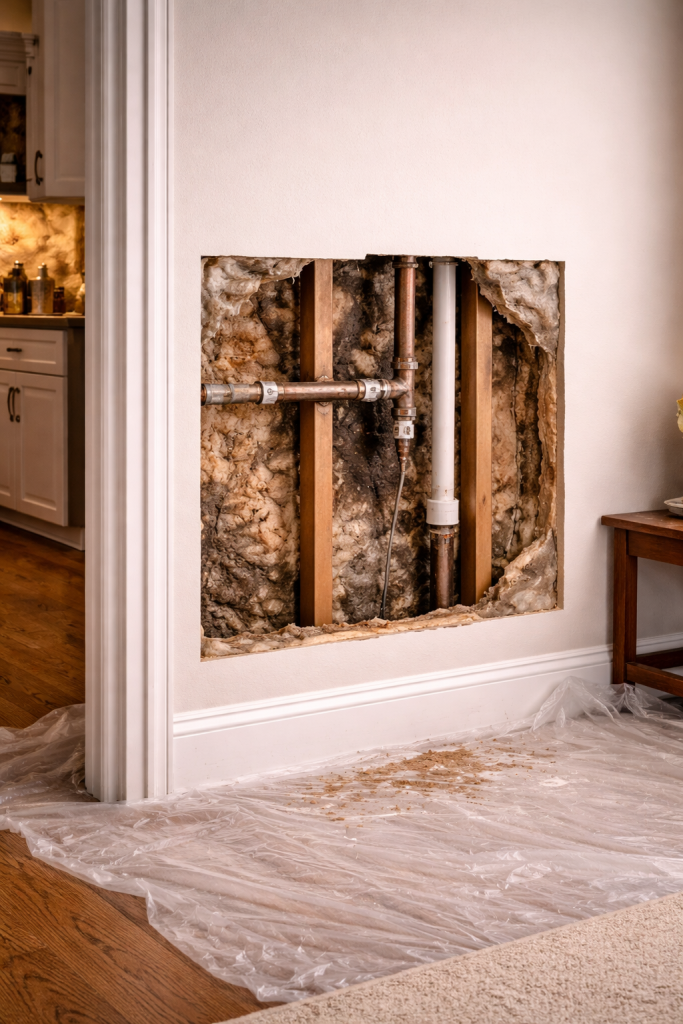
This event maps directly to residential system failures:
Infrastructure System | Residential Equivalent |
Artesian aquifer | Pressurized water line |
Well drilling | Pipe penetration / install |
Uncontrolled flow | Open pipe leak |
Continuous discharge | Ongoing water damage |
👉 Same equation:
Pressure source + no shutoff = continuous damage
🎯 Final Takeaways (Mechanical Framing)
- Root Cause: Penetration of pressurized aquifer without control system
- Trigger: Artesian pressure forcing water upward
- Failure Type: Continuous uncontrolled discharge
- Impact Multiplier: Lack of shutoff + duration of flow
Lesson:
Pressure without control turns supply into a disaster