

🚨 Great Freeze Plumbing Crisis — Full Breakdown Report
Central Valley & Northern California (Winter 1990)
Why This Matters to Homeowners in Northern California:
Pipes don’t fail when you see the problem—they fail silently first, then flood your home when pressure returns.
📍 Geographic + Structural Context (Pre-Event Environment)
This was a region-wide residential infrastructure failure across inland Northern California, with the heaviest impacts in the Central Valley.
Primary regions and cities affected (for scale + search relevance):
Central Valley: Sacramento, Stockton, Modesto, Fresno, Bakersfield
Northern Interior: Redding, Chico
Foothill + Sierra-adjacent zones: Placerville, Grass Valley
Extended NorCal impact: San Jose and surrounding inland areas
Critical preconditions:
Climate assumption: Region typically mild → homes not designed for sustained freezing temperatures
Plumbing layout: Water lines routed through:
Attics
exterior walls
crawlspaces
Insulation gaps: Minimal freeze protection on pipes
System condition: Pressurized municipal water continuously feeding homes
Behavioral factor: Homeowners unprepared for freeze protocols (dripping faucets, insulation, etc.)
The top 10 plumbing and water-related disasters in Northern California history:
1. The Great Flood of 1862 (Sacramento & Central Valley)
This is the “megaflood” by which all others are measured. After 45 days of continuous rain, the Central Valley became an inland sea 300 miles long and 20 miles wide. Downtown Sacramento was under 10 feet of water, forcing the state legislature to move to San Francisco temporarily. This event led to the massive effort to literally raise the city of Sacramento by one story to prevent future catastrophe.
2. The New Year’s Day Flood of 1997
One of the largest modern floods on record, this “warm” storm dropped 30 inches of rain onto deep mountain snowpacks in just three days. The resulting runoff caused levee breaches along the Sacramento and Feather Rivers, leading to the evacuation of 120,000 people and causing roughly $2 billion in damages across Northern California.
3. The Oroville Dam Spillway Crisis (2017)
In early 2017, the main concrete spillway of the Oroville Dam—the tallest dam in the U.S.—cratered during heavy releases. When the emergency spillway was used for the first time in history, it began to erode, threatening a catastrophic wall of water. Over 180,000 residents downstream were evacuated in a single afternoon. The crisis resulted in a $1.1 billion repair project and permanent changes to dam safety laws.
4. The 1990 “Great Freeze” (Statewide/Central Valley)
While not a flood, this was one of the worst plumbing disasters in history. For nearly a week, temperatures in the Central Valley stayed below 25°F. The freeze caused tens of thousands of residential and agricultural pipes to burst simultaneously, causing over $3.4 billion in economic losses and triggering a massive surge in the plumbing and repiping industry.
5. The Delta Island Levee Breaches (1972 & 2004)
The Sacramento-San Joaquin River Delta is a fragile network of “islands” protected by aging levees. In 1972 (Isleton) and 2004 (Jones Tract), major levees failed, flooding thousands of acres of farmland and threatening the freshwater supply for much of the state. These events are constant reminders of the risk posed by the Delta’s sinking “subsided” land.
6. The “Christmas Flood” of 1955
A massive atmospheric river slammed into Northern California just before Christmas, hitting the North Coast and Central Valley. The Eel River reached record flows, and the Feather River burst its banks, killing 74 people and causing statewide disaster declarations. It remains one of the deadliest water events in regional history.
7. The Great San Francisco Earthquake & Fire (1906)
This was as much a water disaster as a seismic one. The earthquake shattered the city’s underground water mains, leaving firefighters with dry hydrants as the city burned. The failure of the city’s plumbing infrastructure was the reason the fire became more destructive than the earthquake itself, leading to the creation of the San Francisco Auxiliary Water Supply System (the high-pressure hydrants you see today).
8. The 1986 Valentine’s Day Flood
A series of “Pineapple Express” storms dumped massive amounts of rain on the Sierra Nevada. This event pushed the Sacramento levee system to its design limit and resulted in a major levee breach at Linda and Olivehurst, which submerged thousands of homes and changed how Northern California manages its bypass and weir systems.
9. The Napa River Flood of 1986
During the same 1986 storm cycle, the Napa River reached a record crest, flooding downtown Napa and the surrounding wine country. The disaster caused $100 million in damage and led to the “Living River” project—a unique, multi-decade flood control plan that uses natural wetlands instead of traditional concrete walls.
10. The 1964 Tsunami (Crescent City)
Triggered by the massive 9.2 earthquake in Alaska, a series of tidal surges hit the coast of Northern California. Crescent City was decimated by four waves, the largest of which was 20 feet high. It destroyed the downtown area, broke water and sewer lines throughout the city, and remains the most significant tsunami event in California history.
🌡️ Weather + Environmental Conditions
This was a prolonged hard freeze event—unusual for the region.
Multiple nights of sub-freezing temperatures
Extended duration with no daytime recovery
Cold penetrated:
Attics
wall cavities
exposed plumbing
👉 Key dynamic:
Cold reached areas never designed to handle it
⚙️ Failure Mechanics (What Actually Broke)
Step-by-Step Breakdown
1. Temperature Drop (Initiation Phase)
Ambient temperatures fell below freezing
Heat loss in homes allowed pipes to cool
2. Water Freezing Inside Pipes
Standing water in pipes began to freeze
Ice formation started at exposed or weak areas
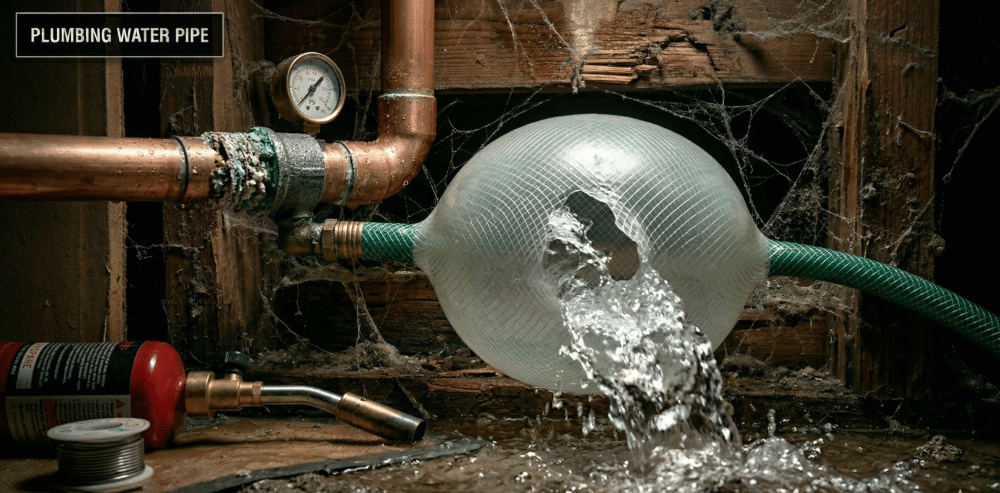
3. Expansion Pressure Build-Up
Water expands ~9% when frozen
Internal pressure increased dramatically
4. Pipe Wall Stress + Rupture
Pressure exceeded pipe strength
Failures occurred at:
joints
elbows
weakest material points
5. Delayed Failure Expression (Critical Stage)
Pipes remained frozen → no visible leak yet
Structural damage already done
6. Thaw Cycle + Pressurized Flooding
Temperatures rose
Ice melted
Water flowed through ruptures at full pressure
7. Multi-Point Failure Across Homes
Thousands of homes experienced:
simultaneous pipe bursts
System-wide residential flooding event
💥 The Event (Winter 1990)
Timeline:
Freeze phase: silent system damage
Thaw phase: visible flooding
Collapse Dynamics
Damage occurred during cold
Flooding occurred after temperatures rose

👉 Failure and impact were time-separated
🏚️ Immediate Damage Profile
Thousands of homes flooded across Northern California
Widespread interior water damage
Damage characteristics:
Water intrusion from:
ceilings (attic lines)
walls
crawlspaces
Structural/material damage:
drywall
insulation
flooring
electrical systems
Outcome:
Insurance losses surged
Large-scale remediation and reconstruction required
🧠 System-Level Failure Analysis
1. Thermal Expansion Failure
Freezing water creates:
internal pressure
👉 Pipes fail from inside out
2. Delayed Catastrophe Effect
Break occurs during freeze
Damage occurs during thaw
👉 Most dangerous because:
No immediate warning
3. Distributed Failure System
Not one failure point
Thousands of simultaneous failures across region
🔁 Direct Aftermath (Short-Term)
Emergency plumbing demand surged
Water shutoffs across neighborhoods
Large-scale drying and repair operations
🧱 Indirect Effects (Long-Term Changes)
🏗️ 1. Pipe Insulation Awareness
Increased use of:
pipe insulation
freeze protection measures
🌡️ 2. Cold Weather Protocols
Homeowners began:
dripping faucets
winterizing exposed lines
📡 3. Leak Detection + Shutoff Systems
Growth in:
automatic shutoff valves
monitoring systems
🏘️ 4. Building Practice Adjustments
Improved:
pipe routing
insulation standards
🧩 Hidden Insights (What Most People Miss)
⚠️ 1. “The Break Happens Before the Flood”
Most assume pipes burst when water is flowing.
Reality:
They break when frozen
⚠️ 2. Mild Climates Are More Vulnerable
Cold regions:
Built for freeze
Mild regions:
Not prepared
⚠️ 3. Small Temperature Changes = System-Wide Impact
A few degrees below freezing:
Triggered thousands of failures
🧠 Contractor / System Thinking Translation
This maps directly to residential failures:
System Condition | Residential Equivalent |
Freezing pipe | Internal pressure buildup |
Pipe rupture | Hidden failure |
Thaw cycle | Sudden leak activation |
Multi-home impact | System-wide vulnerability |
👉 Same equation:
Freeze + pressure + delay = widespread failure
🎯 Final Takeaways (Mechanical Framing)
Root Cause: Freezing of unprotected plumbing systems
Trigger: Extended sub-freezing temperatures
Failure Type: Freeze-induced rupture → delayed flooding
Impact Multiplier: Time delay + distributed system exposure
Lesson:
The damage starts in the freeze—but the flood comes after